

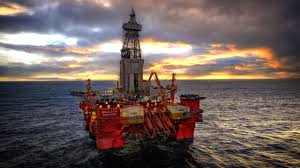
In the recently announced 2026 Budget Statement, Ghana’s Finance Minister, Dr. Cassiel Ato Forson, provided a stark overview of the petroleum sector, highlighting a significant 35.7% reduction in crude oil export receipts, which fell from $3.05 billion in September 2024 to $1.96 billion in September 2025. This decline is attributed to both decreased export volumes and lower global oil prices, with daily oil production dropping from 200,000 barrels per day in 2019 to around 150,000 barrels in 2025 due to natural depletion and a lack of new investments.
The total petroleum receipts for the first nine months of 2025 amounted to $600.8 million, a significant decrease from $1,071.1 million in the same period in 2024. Dr Forson emphasised the critical role of petroleum receipts in financing key national funds but acknowledged that declining output and price volatility necessitate urgent reforms in energy investment and revenue management.
One major proposal in the budget is legislative reform to permit a portion of the Ghana Petroleum Funds (GPFs) to be invested domestically, specifically in commercially viable energy infrastructure projects. Current restrictions limit GPFs to low-risk, foreign-denominated securities, yielding only 1% returns annually over the past thirteen years.
Dr Forson argued for a paradigm shift to make oil wealth work harder for Ghanaians, stating that natural resources should not remain idle abroad but instead contribute to local economic growth. He assured Parliament that accountability in investments would be prioritised, with strong governance frameworks to uphold financial and operational standards.
The government is optimistic about enhancing production through the development of new fields like the PECAN Field, with projected total petroleum receipts for the financial year 2026 set at $985.50 million. This revenue is expected to come primarily from carried and participating interest and corporate income tax, reinforcing the government’s commitment to transparency and accountability in managing the nation’s oil wealth.