

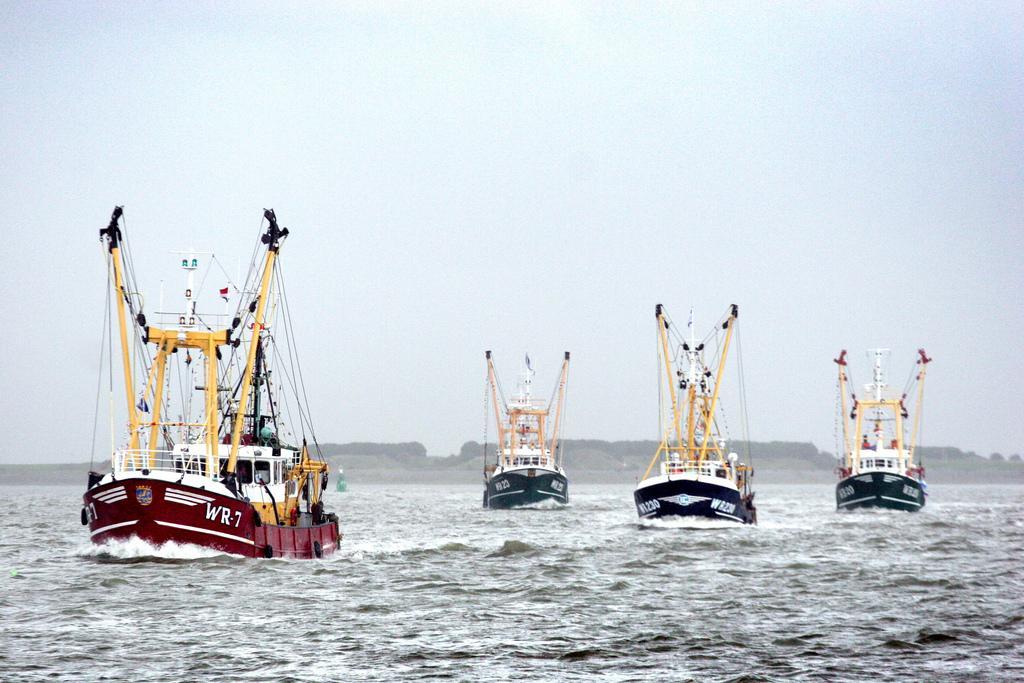
At least half of the Netherlands’ fishing fleet remained docked this week, as surging diesel prices linked to the Iran war deliver an early blow to Europe’s fishing sector.
Industry representatives say the disruption is most severe in the Dutch fleet due to its heavy reliance on fuel-intensive beam trawlers.
These vessels, which account for roughly 7% of the European Union’s fleet and target high-value North Sea species such as sole and turbot, have become increasingly unviable.
According to VisNed, between 80% and 90% of such trawlers did not go to sea, as fuel costs now rival potential earnings.
Dutch Fishers Union spokesperson Durk van Tuinen said weekly fuel expenses have jumped from about €12,000–€13,000 before the conflict began on February 28 to nearly €30,000, leaving little to no margin to pay crews.
The crisis extends beyond the Netherlands, with Belgium and Britain also affected due to similar fishing methods, while vessels targeting cod and haddock across Europe are operating at or below profitability levels.
Europêche managing director Daniel Voces said major fishing nations including Spain, Italy and France have introduced limited support measures, but many operators are still reluctant to sail amid a roughly 70% increase in fuel costs.
Industry leaders have appealed to the European Commission to relax state aid rules, similar to measures introduced during the 2022 energy crisis following Russia’s invasion of Ukraine.
The immediate impact is tightening supply and rising prices, with sole already climbing to €18 at auction from around €12 earlier.
Van Tuinen warned that restaurants may reduce portion sizes or remove fish from menus altogether, as the cost pressures ripple through the supply chain.