

Russia’s gasoline production has dropped to about 65% of peak summer demand after repeated Ukrainian drone attacks forced several of the country’s largest oil refineries to halt operations, according to industry sources.
The strikes, part of Ukraine’s campaign to weaken Russia’s energy infrastructure and war logistics, have disrupted production at key refineries, including NORSI, Omsk and Saratov, significantly tightening domestic fuel supplies.
Industry sources said Russia is currently producing 40,000 to 45,000 metric tons less gasoline per day than required during the high-demand summer season, widening the supply gap from about 25% in June to roughly 35%.
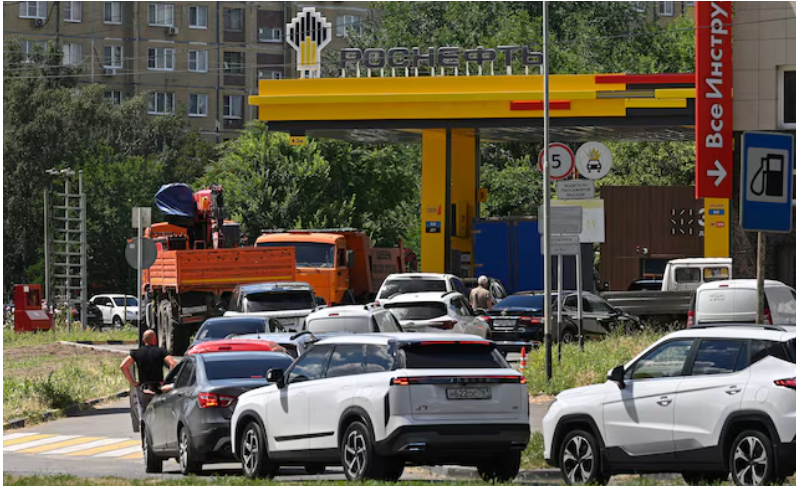
The shortages have led to long queues at filling stations in some regions, prompting Cossack volunteers to assist police in managing traffic and maintaining order as motorists rush to secure fuel.
Some drivers have also begun filling entire fuel tanks instead of purchasing smaller quantities, contributing to panic buying and increasing pressure on already limited supplies, according to Reuters interviews at petrol stations.
Russia’s peak summer gasoline demand stands at approximately 115,000 to 120,000 metric tons per day, industry sources said, leaving the current production levels well below seasonal requirements.
Despite the disruption, market participants expect fuel availability to gradually improve during the second half of July as damaged refineries resume operations and additional fuel imports enter the domestic market.
The recovery outlook, however, depends largely on whether further Ukrainian drone attacks target Russia’s refining infrastructure in the coming weeks.
The fuel supply challenges underscore the growing impact of the conflict on Russia’s domestic energy sector, with attacks increasingly affecting refining capacity rather than crude oil production.
Industry sources said restoring refinery operations and stabilizing fuel distribution remain critical to easing shortages and preventing further disruptions to Russia’s transportation and industrial activities.