

As the sun sets across the African continent, darkness follows. Not just the natural fall of night, but a silence marked by the absence of light, electricity, and opportunity. There are no flickering streetlights, no soft hum of fans or refrigerators, only stillness. For millions, even the simple act of schoolchildren completing homework before dusk is a rare privilege. Their only illumination comes from the dim glow of a candle or the smoky flame of a kerosene lamp, casting long shadows over a future clouded by energy poverty.
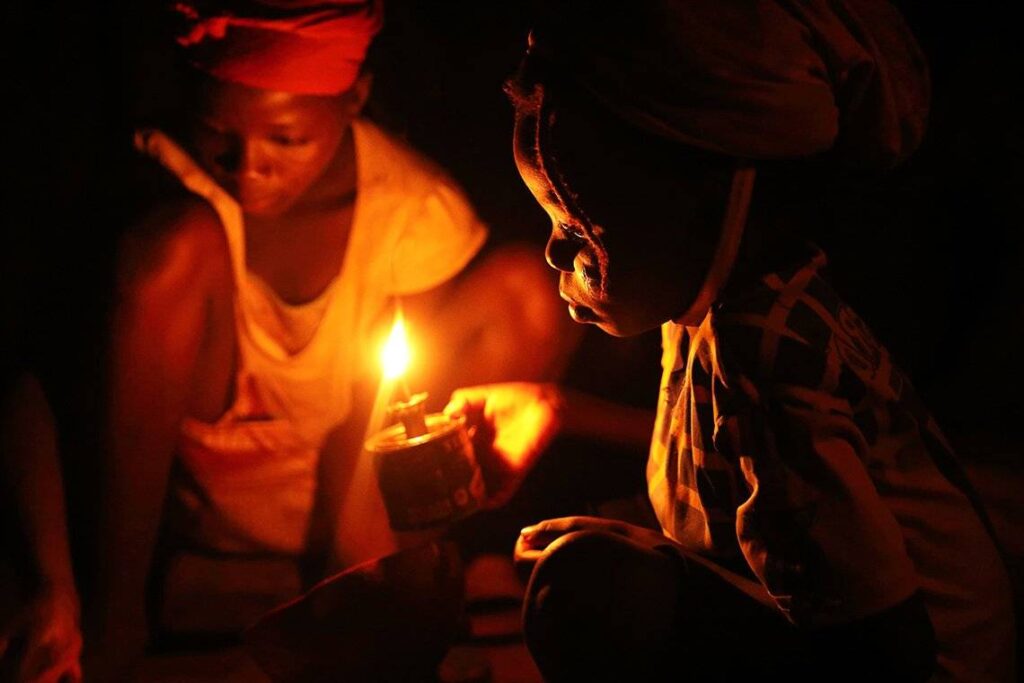
This is the daily reality for more than 600 million Africans who live without access to electricity. Africa remains the most energy-deficient continent in the world, and this persistent shortfall continues to undermine economic growth, education, healthcare, and climate resilience. With the population projected to reach 2.5 billion by 2050, the urgency to deliver clean, reliable, and affordable energy has never been greater.
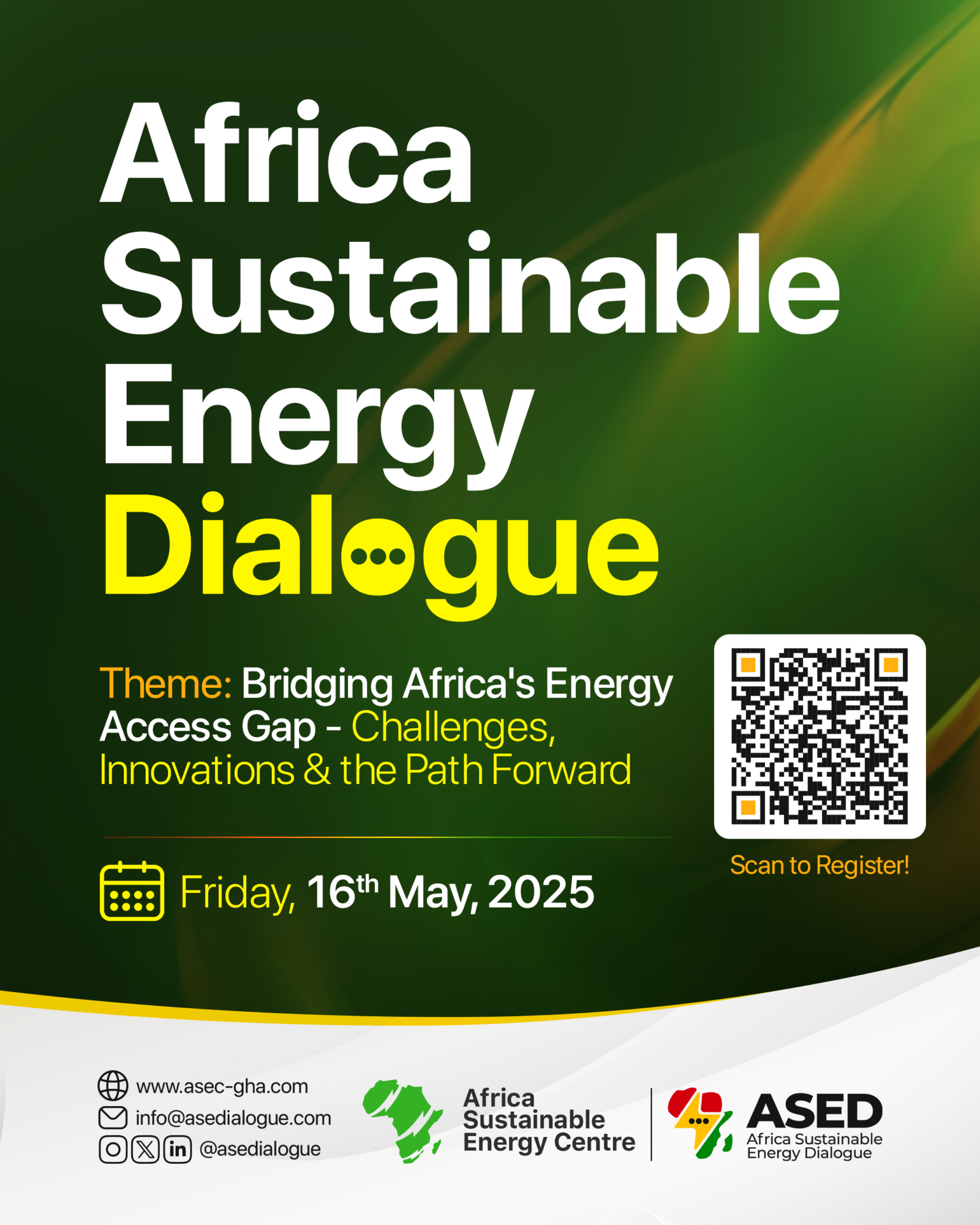
The scale of energy poverty in Africa has become one of the continent’s most urgent development challenges, impeding progress in health, education, economic growth, and climate resilience. In response, a high-level gathering of policymakers, energy experts, financiers, and innovators will convene on Friday, May 16, for the Africa Sustainable Energy Dialogue (ASED) 2025, a virtual event hosted by the Africa Sustainable Energy Centre (ASEC).

Held under the theme “Bridging Africa’s Energy Gap – Challenges, Innovations & the Path Forward”, the forum seeks to examine practical, scalable strategies to accelerate reliable and sustainable energy access across the continent. The event will begin at 13:00 GMT.
Ing. Justice Ohene-Akoto, Executive Director of ASEC, said the dialogue aims to produce a unified, actionable roadmap toward universal energy access. In an interview ahead of the event with Luke Harmer, he noted that insights shared by the panel of vetted experts—ranging from historical perspectives to current innovations—will be compiled into a white paper. This document will be submitted to governments and relevant institutions as a resource for potential policy adoption and implementation.
High-Profile Lineup of Speakers
The webinar will feature a distinguished group of speakers with extensive contributions to Africa’s energy landscape.
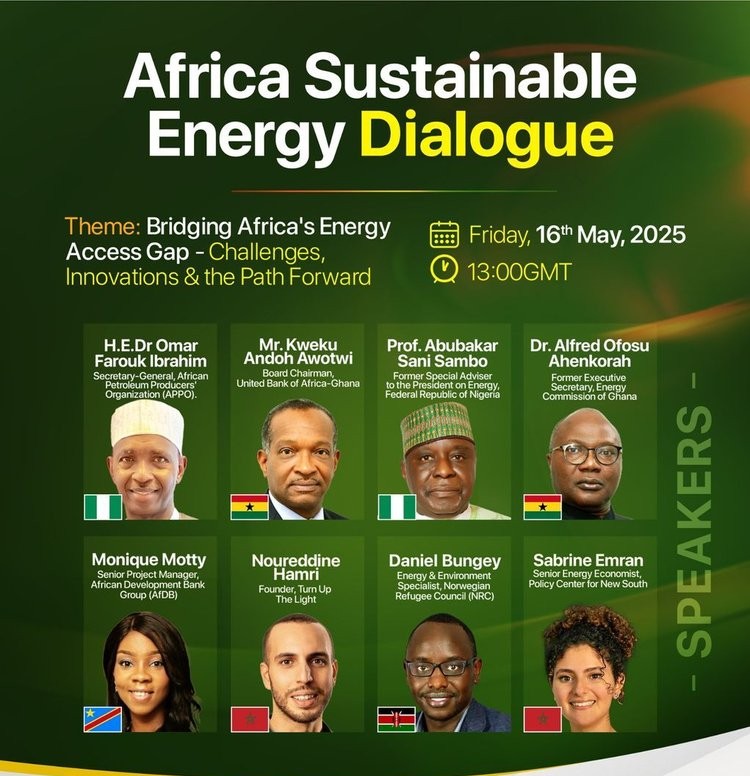
Among them is Prof. Emeritus Abubakar Sani Sambo, former Director General of Nigeria’s Energy Commission and a leading figure in West Africa’s energy transition discourse. Dr. Alfred Ofosu-Ahenkorah, former Executive Secretary of Ghana’s Energy Commission, will offer insights into sustainable energy policy and institutional reform.
Also speaking is Sabrine Emran, Senior Energy Economist at the Policy Centre for the New South, who will examine scalable investment models and regional policy frameworks. Representing multilateral finance is Monique Motty, Senior Project Manager at the African Development Bank and a board member of the Future Energy Leaders under the World Energy Council.
Bridging policy and industry perspectives, H.E. Dr. Omar Farouk Ibrahim, Secretary-General of the African Petroleum Producers’ Organisation (APPO), will present a viewpoint on just energy transitions in resource-dependent economies.
The event also includes insights from Mr. Kweku Awotwi, Chairman of UBA Ghana and former Executive Vice President of Tullow Oil, and Noureddine Hamri, founder of the clean energy advocacy group Turn Up The Light, known for championing youth innovation in Africa’s energy ecosystem.
Context and Long-Term Impact
With Africa’s population projected to reach 2.5 billion by 2050, demand for energy will continue to rise sharply. Experts warn that failure to expand energy access will hinder economic development, healthcare, education, and the continent’s climate resilience.
ASED 2025 is expected to dissect the root causes of energy poverty and propose solutions across three critical pillars: policy, finance, and technology. Case studies of successful interventions will be discussed, alongside emerging strategies for energy efficiency, decentralised power systems, and public-private partnerships.
While the May 16 webinar serves as the first phase of the dialogue, organisers say a second, in-person edition is scheduled to take place later this year in Accra, Ghana. Insights from both events will be compiled into a white paper and submitted to governments and regional bodies as a contribution toward evidence-based policymaking.
Participation and Access
ASED 2025 is open to a broad audience including energy professionals, investors, government agencies, NGOs, researchers, and students. Organisers have called on all stakeholders committed to advancing Africa’s clean energy future to participate in the virtual event and contribute to shaping long-term solutions.
Watch the official video: https://youtu.be/-kmwd-FwAMw
For more information: info@asedialogue.com or https://www.asec-gha.com
SOURCE: Energy Ghana