
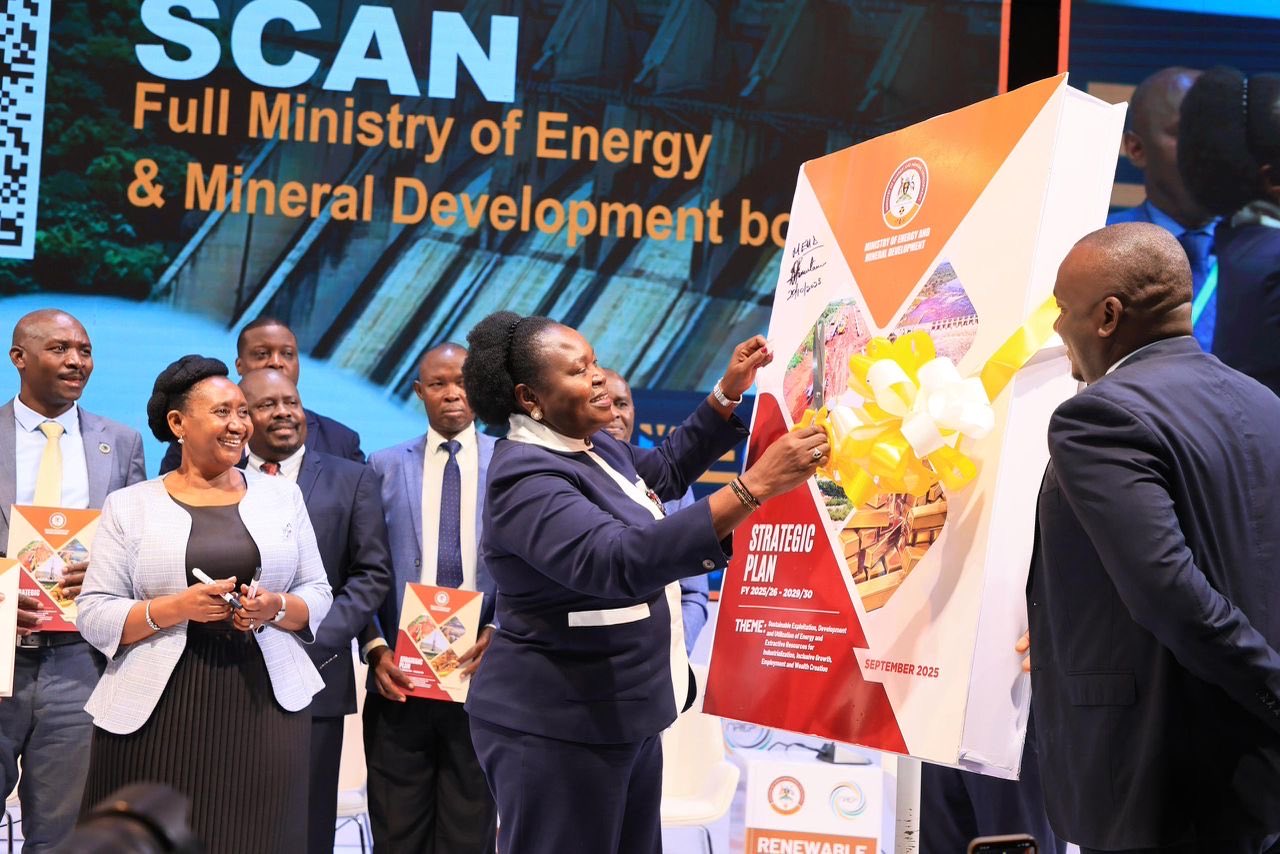

The Ugandan government has set an ambitious goal to develop a $500 billion economy, emphasizing the importance of clean, affordable, and sustainable energy as a catalyst for industrialization and job creation. Ruth Nankabirwa, the Minister of Energy and Mineral Development, articulated this vision during the Sustainable Energy Development Programme Performance Review at the Renewable Energy Conference and Expo 2025 (REC25) in Kampala. The event attracted over 500 participants from various sectors, focusing on innovations and investment opportunities in the energy sector.
Currently, Uganda’s energy access stands at 60%, thanks to significant investments in generation, transmission, and distribution infrastructure. Key transmission projects, such as Karuma-Kawanda and Gulu-Kole-Nebbi-Arua, have enhanced grid reliability and expanded supply to homes and industries. The government aims to scale energy generation to 15,420 MW by 2030 and 52,481 MW by 2040 while modernizing networks and promoting off-grid solutions.
Recent initiatives include the 6 MW Nyagak III Hydropower Plant and the 20 MW Nkonge Solar PV Plant. Furthermore, Uganda has integrated over 200,000 new grid connections and fully linked the West Nile region to the national grid. To support clean energy, the government has launched the Biofuels Blending Programme and the Clean Cooking Unit, aiming to transition 50% of households to clean cooking technologies by 2030.
Nankabirwa emphasized the importance of collaboration among government, private sector, and development partners to achieve universal access to electricity and clean energy by 2040. This strategic approach positions Uganda as a regional leader in energy-led transformation, reflecting the country’s commitment to sustainability and economic growth.