

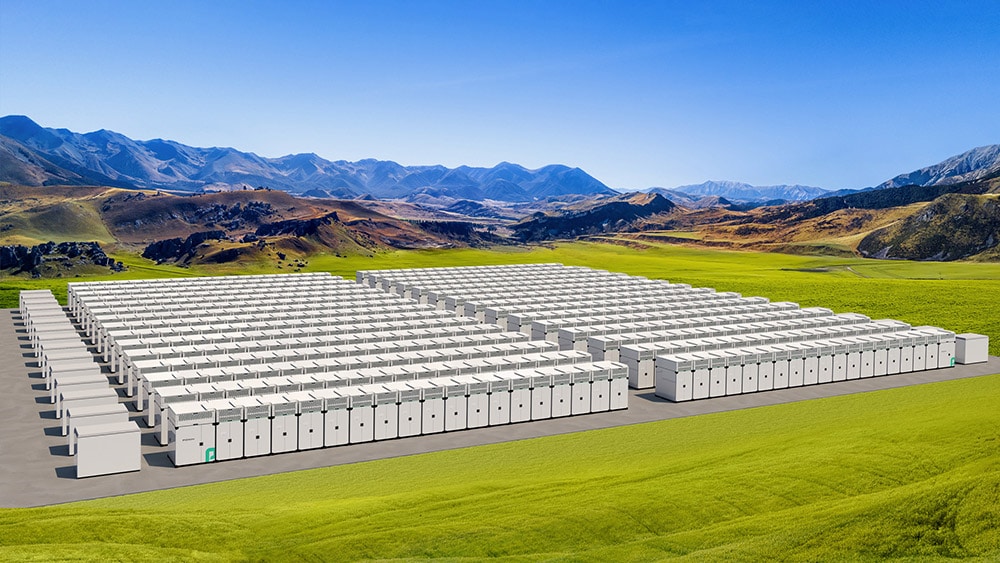
Energy Storage is the process of capturing and storing energy produced for later use. Like a bank account, energy storage technologies deposit energy when it is in abundance and withdraw it when it is needed.
As the world transitions to renewable energies, energy storage technologies have become more important than ever in this transition because they are key to ensuring reliability, balancing supply and demand, and integrating clean energy into national grids.
Here is a look at five of the top energy storage technologies worldwide as demand for energy storage can only continue to grow, and a variety of technologies are being used on different scales.
- Pumped storage hydroelectricity
Pumped storage hydroelectricity is the oldest, most widely deployed, and highest-capacity form of energy storage in the world. It can store vast amounts of energy over extended periods and plays a crucial role in providing grid stability services. The system operates by pumping water to a higher elevation during periods of low electricity demand and releasing it to generate power when demand peaks. Though highly efficient (with efficiency rates between 70-85%), pumped hydro storage is limited by geography, requiring specific conditions like large bodies of water and significant elevation differences.
- Lithium-ion batteries
Lithium-ion batteries are also widely used energy storage technology, valued for their high energy density, efficiency, and rapid response times. They are highly versatile, supporting applications from residential use to large-scale battery energy storage systems (BESS).
These electrochemical batteries store and release energy by moving lithium ions between electrodes. Originally dominant in consumer electronics and electric vehicles, their use is rapidly expanding into utility-scale storage. There has been a decline in costs, making them increasingly accessible. However, they have a shorter life cycle compared to mechanical storage systems, and there are raised concerns over the sourcing of raw materials.
- Flow Batteries
These are ideal for long-duration energy storage and applications requiring sustained performance. Unlike conventional batteries, which store energy in solid electrodes, flow batteries use liquid electrolytes stored in external tanks.
These liquids are circulated through a cell, where electrochemical reactions store or release energy. This design enhances safety, eliminating the risk of explosion, and allows for easy scalability through modular units. Flow batteries can deliver energy over extended periods, making them well-suited for grid support and integration with renewable energy sources.
- Compressed Air Energy Storage (CAES)
Compressed Air Energy Storage (CAES) is best used for grid balancing and load shedding. This mechanical storage method uses excess electricity to compress air and store it in large underground caverns or purpose-built tanks.
CAES generates electricity by releasing stored air, expanding it through a turbine, often with added heat, to produce power. It can store large amounts of energy over long periods, even up to 20 years, using abundant and accessible air as the storage medium. However, CAES has lower efficiency than other storage technologies. It also depends on specific underground geological formations for storage and typically requires fossil fuels for the heating process.
- Thermal Energy Storage
Thermal Energy Storage(TES) systems store energy in the form of heat or cold by raising or lowering the temperature of a storage medium. Common mediums include molten salt, water, concrete, or phase-change materials. The stored thermal energy can then be used directly for heating/cooling or converted back into electricity. It’s a promising solution for integrating renewable power into energy-intensive sectors. Although TES systems are highly specialised and typically require a large amount of space, they are crucial in industries with significant thermal energy demands.
As renewable energy adoption accelerates, there is a need for energy storage technologies to aid in the transition. Each of these storage technologies plays a unique role in supporting a sustainable and resilient energy grid. The country has also improved in monitoring and stakeholder engagement, contributing to better utility accountability.