

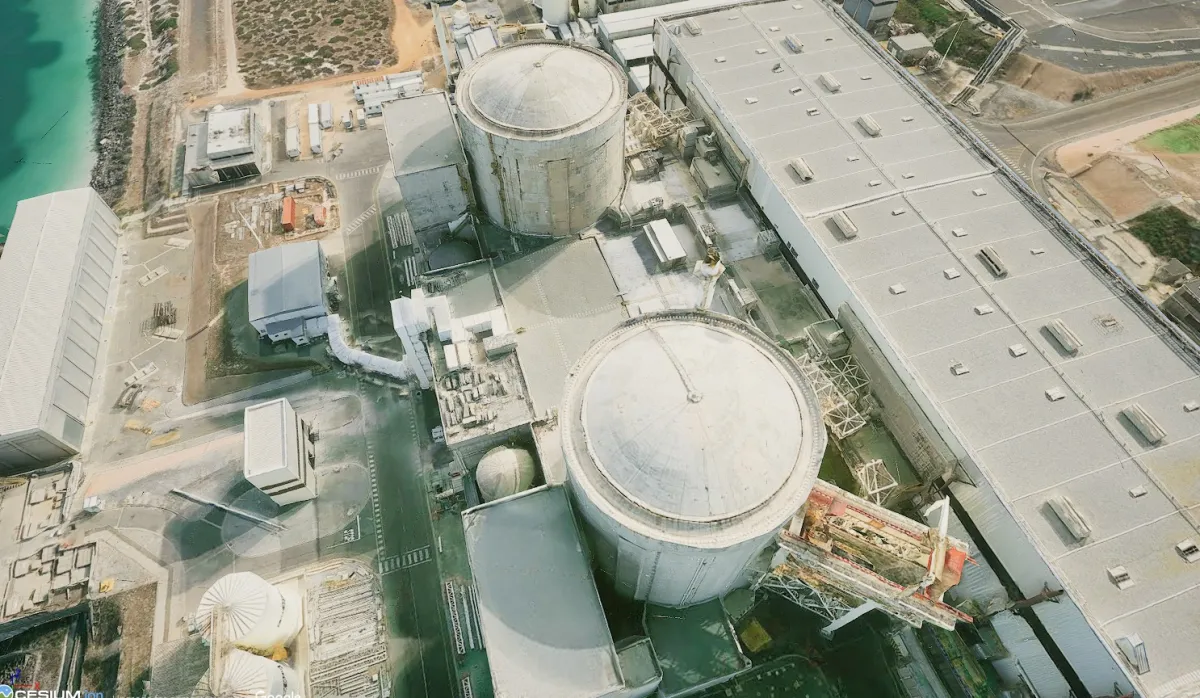
South Africa’s Deputy Minister for Electricity and Energy, Hon. Alexandra Abrahams, has visited the Koeberg Nuclear Power Station to assess the facility’s operations and its role in supporting the country’s electricity security.
During the visit, Hon. Abrahams received updates on the plant’s operational performance, nuclear waste management and specialist skills development. She also toured the simulator used to train Koeberg’s operators.
Koeberg, Africa’s only commercial nuclear power station, consists of two generating units with a combined capacity of approximately 1,860 megawatts (MW). The facility is an important source of electricity for the Western Cape.
Both units have secured 20-year licence extensions, with Unit 1 authorised to operate until July 2044 and Unit 2 until November 2045.
Hon. Abrahams said effective government oversight requires a strong understanding of the institutions, infrastructure and technical systems responsible for maintaining electricity security. She described Koeberg as a critical national asset and said the visit provided an opportunity to engage with personnel operating the facility and identify areas requiring continued government attention.
She noted that the plant’s long-term contribution to South Africa’s power supply would depend on effective maintenance, the retention and development of specialised nuclear expertise, dependable supply chains, proper waste management and continued compliance with National Nuclear Regulator requirements.
According to Hon. Abrahams, Koeberg’s reliability is important not only for electricity security but also for affordability. Stable nuclear generation can strengthen grid stability and reduce reliance on more expensive emergency power, benefiting households and businesses facing high electricity costs.
She added that the affordability of nuclear power should be assessed over the plant’s entire operating life, taking into account maintenance, regulatory compliance, waste management, eventual decommissioning and the cost of maintaining the specialised skills needed for safe operations.
Hon. Abrahams said the licence extensions provide South Africa with an opportunity to maximise the value of existing nuclear infrastructure, but stressed that this would require strict safety standards, sound financial management and transparent oversight.
The Deputy Minister was also briefed on recent minor radioactive contamination incidents recorded during maintenance activities. Officials indicated that the contamination remained within the plant’s containment structures, while monitoring and protection systems operated as intended, with no radioactive material released into the surrounding environment.
The incidents were classified as Level 0 on the International Nuclear and Radiological Event Scale (INES), meaning they had no safety significance.
Hon. Abrahams said the briefing confirmed that there was no threat to nearby communities or the environment. However, she stressed that maintaining public confidence in nuclear energy would require transparency, independent regulation and a commitment to learning from all operational incidents, regardless of their severity.