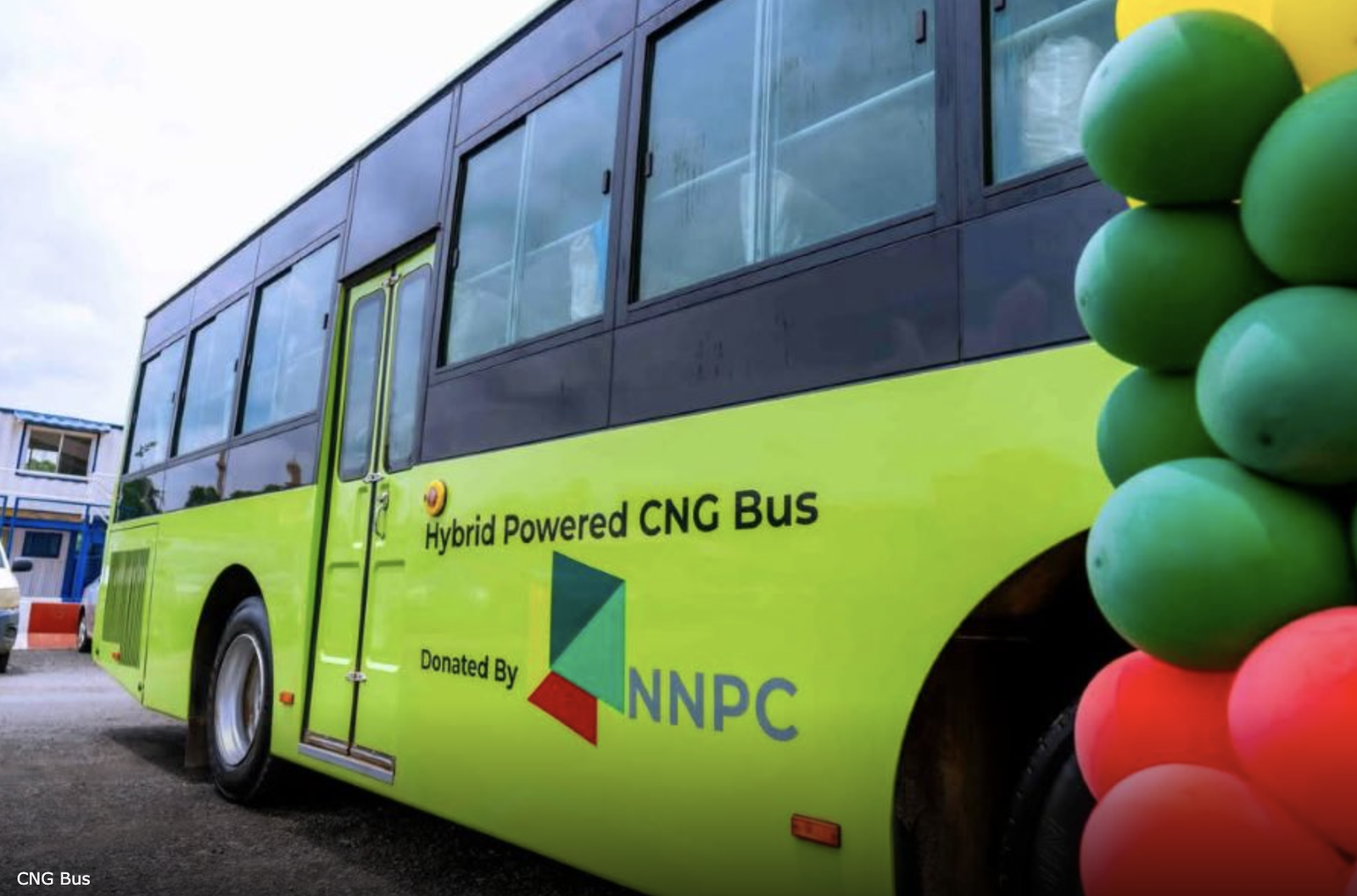

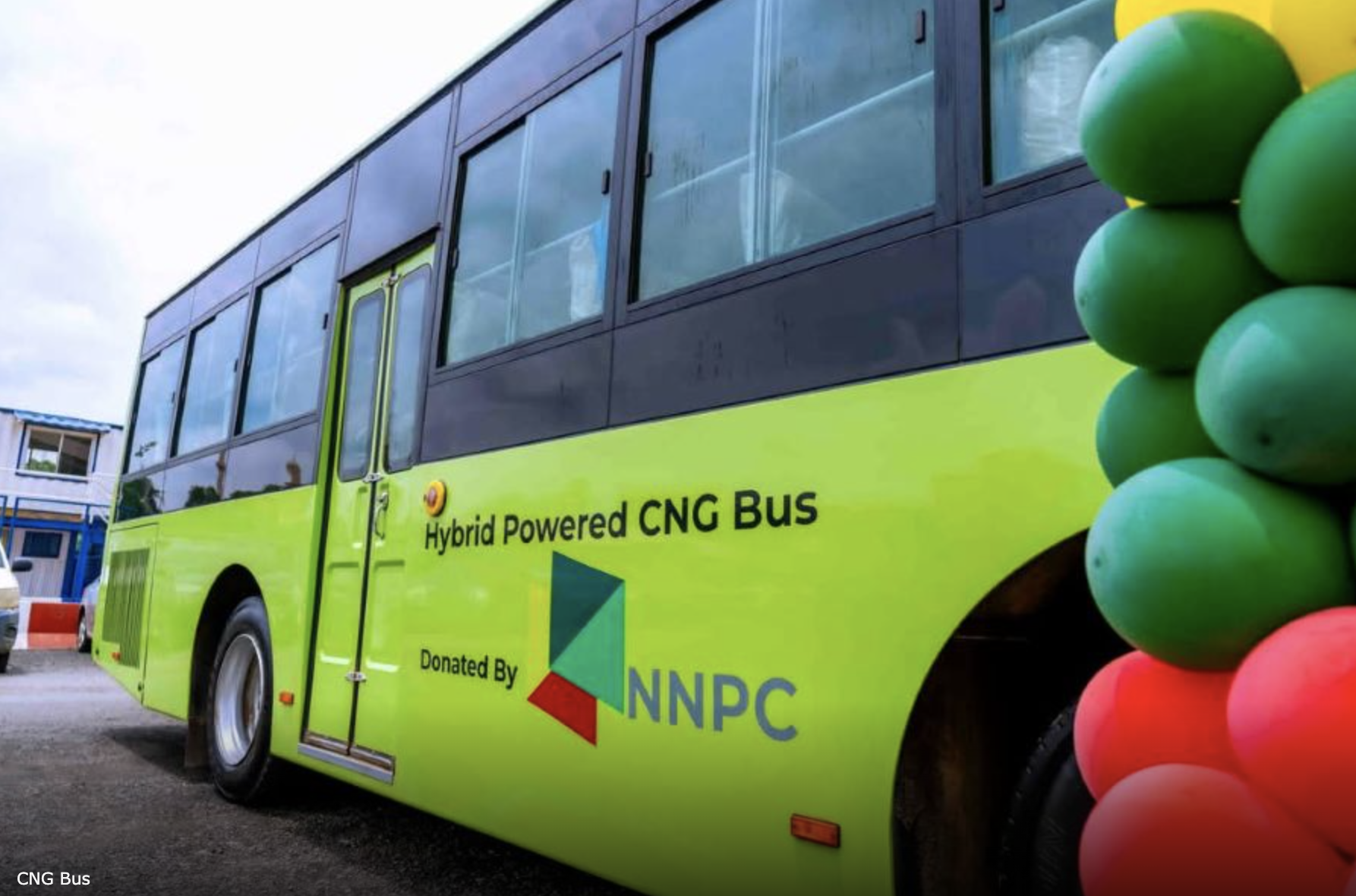
Nigerian commuters are expected to begin seeing reductions in transportation costs from October 1 as the federal and state governments collaborate with transport stakeholders to expand the use of cheaper compressed natural gas (CNG) powered buses, President Bola Tinubu has said.
In a statement issued on Saturday, President Tinubu recalled a meeting with the governors of Nigeria’s 36 states on August 27, where an agreement was reached to ensure that more citizens benefit from reduced transportation costs.
Following the meeting, an implementation committee for the National Affordable CNG Transit Programme was established under the Nigeria Governors’ Forum.
The committee, chaired by Kwara State Governor AbdulRahman AbdulRazaq, is working with relevant stakeholders to identify priority transport corridors and determine suitable interventions for reducing fares.
President Tinubu said the committee, the Presidential Initiative for Compressed Natural Gas (PI CNG) and electric vehicles (EVs), state governments and other stakeholders were already putting the necessary arrangements in place.
He said the need for action had become more urgent due to the global energy crisis, which has contributed to higher petrol and diesel prices and increased transportation costs.
According to President Tinubu, existing CNG and electric transport programmes in several states demonstrate how cheaper energy sources can generate significant savings for commuters.
In Borno State, for instance, CNG powered and electric public transport services charge between 50 naira and 100 naira on routes where commercial operators charge between 300 naira and 600 naira.
In Kaduna, 100 CNG powered buses provide free transportation along major routes. The buses transported about 3.2 million passengers during their first year of operation and saved commuters more than 3.5 billion naira in transportation expenses, President Tinubu said.
In Oyo State, the deployment of CNG buses by Pacesetter Transport reduced fares on the Lagos Ibadan route from about 8,000 naira to 3,200 naira during the initial phase of the programme.
Alternative energy powered transit services in Adamawa have reduced fares by as much as 50%, bringing the cost down from 8,000 naira to 4,000 naira.
In Enugu State, where 100 CNG buses have been deployed, the fare on the Enugu Nsukka route has fallen from 2,500 naira to 1,500 naira, according to the president.
Government supported buses in Plateau State transport approximately 13,000 commuters each day for 200 naira, compared with fares of more than 500 naira charged by commercial operators.
President Tinubu also highlighted a partnership with the National Union of Road Transport Workers (NURTW), through which passengers using CNG converted commercial vehicles on several routes in Abuja benefit from a 40% reduction in fares.
On the Area 1 Gwagwalada route, fares have fallen from 1,500 naira to 900 naira, while fares on the Nyanya route have dropped from 700 naira to 420 naira. On the Wuse route, fares have been reduced from 400 naira to 240 naira.
In Niger State, passengers travelling on the Suleja Abuja route now pay 550 naira, compared with about 800 naira previously. Abia State, meanwhile, has deployed 40 electric buses, with fares subsidised by 50%, President Tinubu said.
The president commended governors and state governments that had acted quickly to expand alternative energy transportation but urged them to intensify their efforts. He also assured the states of continued federal government support.
President Tinubu said disruptions to global energy supplies were putting upward pressure on petrol and diesel prices and consequently increasing transportation costs around the world.
While Nigeria could not influence global energy markets, he said the country’s status as a gas rich nation provided an opportunity to reduce exposure to high fuel costs by expanding the use of cheaper energy alternatives.
The president said his administration had spent the past three years developing a CNG transportation ecosystem across Nigeria.
More than 120,000 vehicles have already been converted to CNG, supported by over 400 certified conversion centres and more than 90 CNG refuelling stations across the country, he said.
President Tinubu urged state governments to sustain the momentum towards October 1 by working closely with transport unions and commercial operators to encourage vehicle conversions and accelerate fleet deployment.
“Above all, ensure that savings from cheaper energy reach Nigerian citizens through lower fares,” he told the governors.