
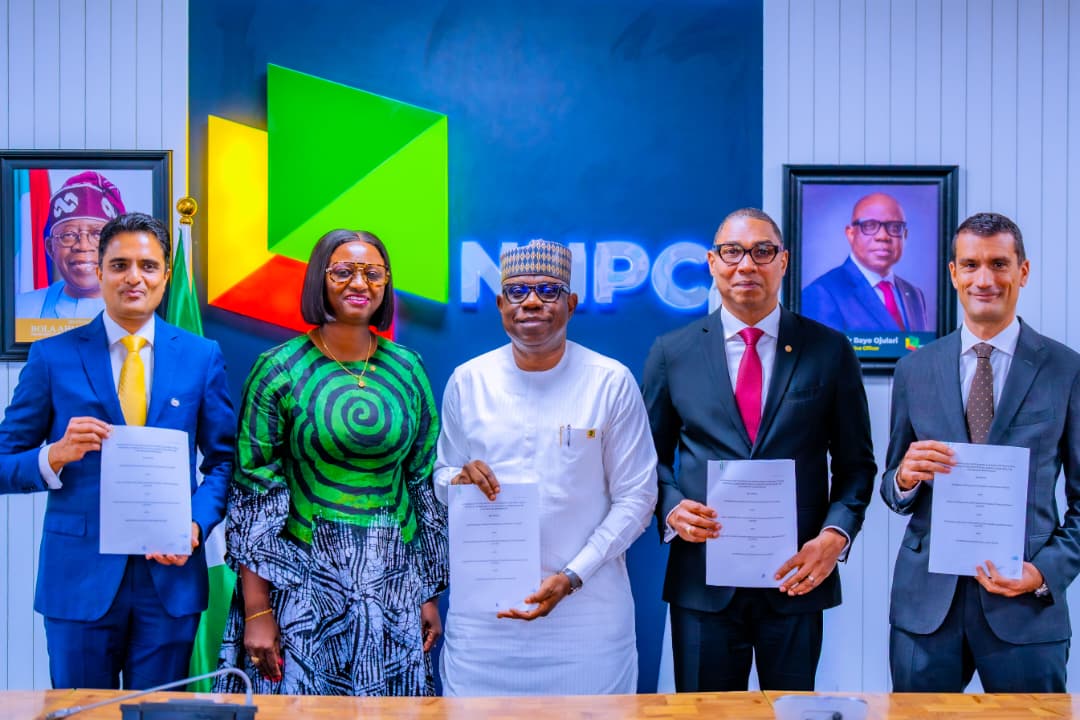
Nigeria’s Bonga Southwest/Aparo (BSWAp) deepwater project has moved a step closer to reaching a final investment decision after NNPC Ltd and its partners signed key agreements to support its development.
The proposed project, located in Oil Mining Lease (OML) 118, could attract investment of up to $21 billion, making it one of Nigeria’s largest planned deepwater developments. It is expected to reach peak production of approximately 175,000 barrels of crude oil per day and 140 million standard cubic feet of gas per day.
NNPC Ltd signed the agreements with its OML 118 partners — Shell Nigeria Exploration and Production Company Ltd, Esso Exploration and Production Nigeria (Deepwater) Ltd and Nigerian Agip Exploration Ltd.
The parties executed addenda to the OML 118 Production Sharing Contract and the Dispute Settlement Agreement, incorporating new fiscal and commercial terms approved by the Nigerian government to facilitate the project’s development.
According to NNPC, the agreements reflect the impact of government reforms aimed at improving Nigeria’s appeal to investors and creating a more competitive environment for major deepwater projects.
The development follows President Bola Tinubu’s approval of the Deep Offshore Oil and Gas Projects Incentives (Tax Remission) Order, 2026, which seeks to strengthen Nigeria’s deepwater investment framework and encourage new capital inflows into the sector.
NNPC Group Chief Executive Officer, Bayo Ojulari said the signing demonstrated that recent policy reforms were helping to turn previously uncertain investment opportunities into concrete projects.
The project partners have also completed the pre-front-end engineering design stage, allowing the project to progress to the more detailed front-end engineering design phase.
With these agreements and engineering milestones completed, the Bonga Southwest/Aparo project is now positioned closer to a final investment decision and could significantly boost Nigeria’s deepwater oil and gas production while unlocking substantial new investment in the country’s petroleum sector.