

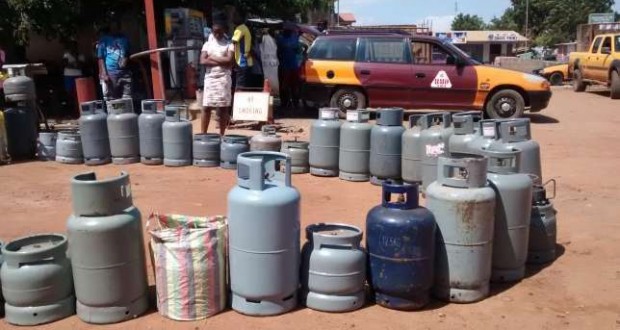
Ghana’s monthly liquefied petroleum gas (LPG) import arrangements are helping to cushion consumers against sharp price increases on the international market, the National Petroleum Authority (NPA) has said.
Abass Tasunti, Director of Economic Regulation and Planning at the NPA, explained that the tender programme secures import prices for a month, allowing local LPG prices to remain stable or decline despite increases in international market prices.
Speaking on Joy News’ PM Express Business Edition, Mr Tasunti said each imported cargo typically covers a month’s supply, with the purchase price fixed for that period.
He said the arrangement explains why LPG prices have declined in the current pricing window despite a significant increase in international prices expected in the next window.
According to him, Ghana had already secured its previous consignment at a lower price before the latest international price increases, providing temporary relief to consumers.
Mr Tasunti, however, noted that the cushioning effect depends on the price at which each new consignment is purchased. Once the existing supply arrangement expires, a higher import price could translate into increased domestic LPG prices.
He said the same pricing mechanism had contributed to an earlier sharp increase in LPG prices when a new consignment was secured at a higher cost than the previous month’s supply.
On diesel prices, the NPA official attributed rising costs partly to disruptions in major international supply sources.
He cited the Russia-Ukraine war and attacks on Russian refineries as factors affecting diesel availability, explaining that reduced supply on the international market could drive prices upwards.
He noted that when major supply sources are disrupted, the resulting shortage places upward pressure on prices through the forces of supply and demand.
The NPA’s explanation highlights how Ghana’s monthly LPG procurement arrangements can temporarily protect consumers from international market volatility, although the relief depends on the cost of subsequent imported supplies.