

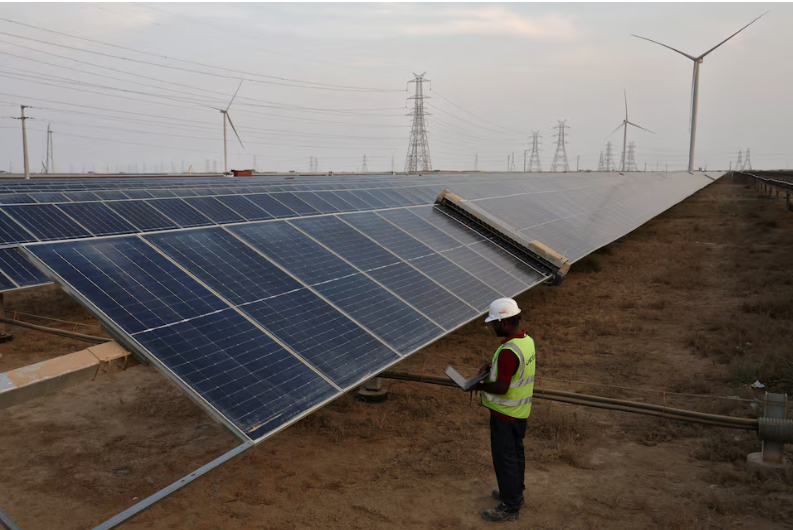
India’s power regulator has directed renewable energy developers to either surrender unused transmission connectivity or provide higher bank guarantees if they fail to generate electricity, in a move aimed at improving the use of the country’s power grid.
The order, issued by the Central Electricity Regulatory Commission (CERC) on July 11, seeks to release transmission capacity tied up by delayed or inactive renewable energy projects and make it available to developers ready to supply power.
The regulator said a significant amount of renewable energy capacity awarded between 2019 and 2025 remains without buyers, leaving valuable transmission infrastructure occupied by projects that have yet to become operational.
To address the bottleneck, developers will be allowed to transfer their transmission rights to another power-generating company within the same corporate group that is already producing electricity but lacks grid connectivity.
Companies that wish to retain their transmission access despite project delays must provide additional bank guarantees and proceed with developing their projects independently, according to the CERC.
The commission estimates that around 15.7 gigawatts (GW) of transmission connectivity could be freed under the new rules, creating room for more viable renewable energy projects.
Any transmission capacity voluntarily surrendered will first be offered to existing applicants within the same substation cluster before any remaining capacity is allocated through an auction process.
The measures are designed to improve the efficiency of India’s transmission network, reduce congestion, and ensure grid infrastructure is used by projects capable of delivering electricity.
The reforms form part of India’s broader efforts to accelerate renewable energy deployment while ensuring that transmission resources keep pace with the country’s rapidly expanding clean energy sector.