

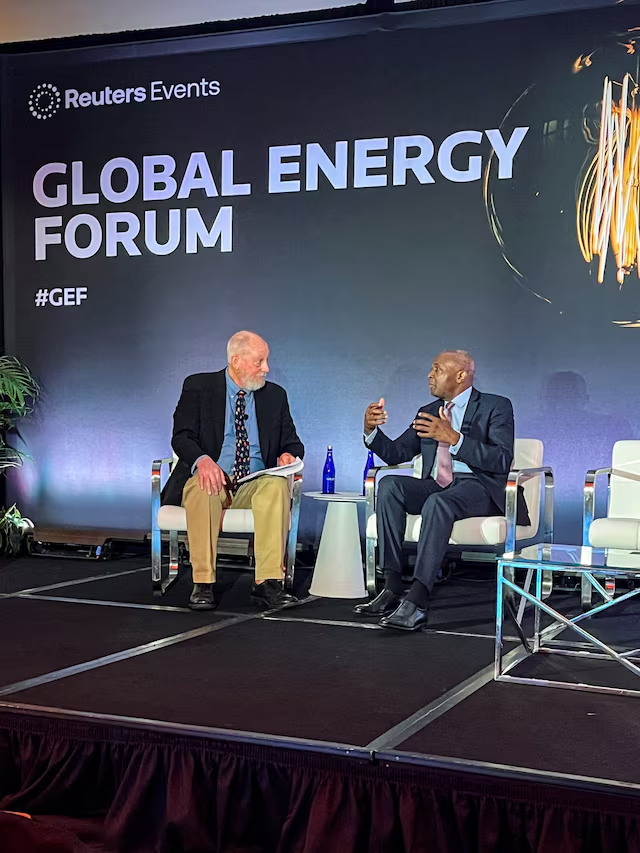
Global natural gas markets are expected to begin stabilising in the third quarter of 2026 following the reopening of the Strait of Hormuz after the ceasefire between the United States and Iran, according to the Secretary-General of the Gas Exporting Countries Forum (GECF), Philip Mshelbila.
Speaking at the Reuters Global Energy Forum in New York on Wednesday, Mshelbila said the restoration of shipping through the strategic waterway would help ease market disruptions and support a gradual return to normal trading conditions.
“If we assume that the Strait is now open and will remain open, our view is that in the course of this next quarter we will begin to see some re-stabilisation in the market,” he said.
The Strait of Hormuz is one of the world’s most important energy transit routes, carrying a significant share of global oil and liquefied natural gas (LNG) exports. Concerns over disruptions to shipments during the recent conflict between Iran, the United States and Israel contributed to heightened volatility in global energy markets.
The conflict disrupted oil and gas exports from major Middle Eastern producers, sending energy prices to their highest levels in years and prompting governments worldwide to release strategic reserves and implement measures to shield consumers from rising energy costs.
Mshelbila expressed confidence that gas flows and prices would gradually move closer to pre-conflict levels by the fourth quarter of the year, although Asian LNG prices could remain elevated in the near term.
Global gas markets have faced significant pressure in recent months. In March 2026, gas prices in both Europe and Asia climbed to their highest levels since the 2022–2023 energy crisis triggered by Russia’s invasion of Ukraine.
The GECF Secretary-General also highlighted Africa’s growing role in the global LNG market, noting that several African countries are expected to emerge as LNG exporters in the coming years. The additional supply, he said, could contribute to easing global market tightness and exert downward pressure on prices.
On the demand side, Mshelbila projected continued growth in China’s LNG consumption despite the country’s efforts to diversify its energy mix through renewable energy expansion, increased domestic gas production and pipeline imports from Russia.
“Coal-to-gas switching is going to continue, and we do believe that the growth in China’s LNG demand will continue,” he said.
Addressing the European Union’s proposed methane emissions regulations for LNG imports, Mshelbila said while environmental protection remains important, international climate policies should be developed through broader consultation to ensure they are practical and achievable for producers worldwide.
The GECF, which represents major gas-exporting nations including Algeria, Egypt, Iran, Nigeria, Qatar, Russia, the United Arab Emirates and Venezuela, accounts for approximately 70 per cent of the world’s proven natural gas reserves.