

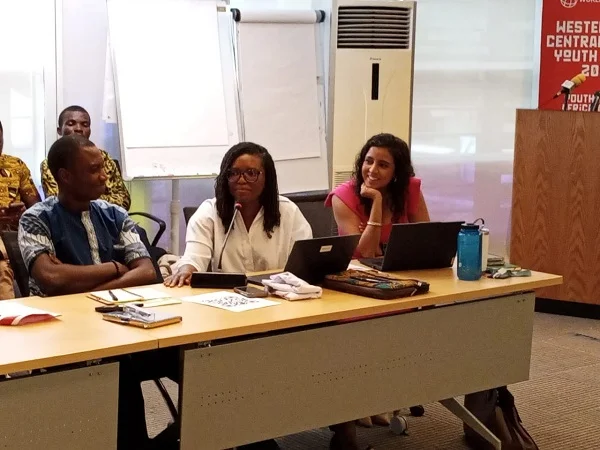
The Senior Energy Specialist for Ghana, Liberia and Sierra Leone at the World Bank, Maame Tabuah Ankoh, has urged Ghana to fully harness its abundant renewable energy resources to provide reliable and affordable electricity for households and industries, arguing that cheaper power is critical to the growth of the country’s manufacturing sector.
Speaking at the 2026 World Bank Western and Central Africa Youth Forum in Accra, Ms Ankoh said Ghana possesses significant solar and natural gas resources that could be utilised more effectively to reduce electricity costs and improve industrial competitiveness.
The forum, held under the theme “Youth Works, Africa Thrives,” brought together youth representatives from Ghana, Nigeria, Guinea, Niger, Senegal, Cameroon and the United States.
According to Ms Ankoh, high electricity tariffs continue to undermine business growth and increase production costs, making it difficult for local manufacturers to expand operations and compete effectively.
“Energy is the lifeblood of the economy,” she said, stressing that affordable and reliable electricity is essential for productivity, job creation and economic transformation.
She noted that although Ghana has achieved approximately 89 per cent electricity access, major challenges remain in affordability, reliability and sustainability.
Ms Ankoh attributed the country’s high power tariffs partly to policy decisions, including the procurement of expensive power generation plants and the underutilisation of domestic gas resources. She argued that Ghana has the capacity to generate electricity at lower costs if it fully exploits its natural gas reserves and expands investment in renewable energy sources such as solar power.
She further warned that decisions made today in the energy sector would have long-term consequences for businesses and consumers. According to her, reliance on costly thermal generation instead of more affordable renewable energy options ultimately translates into higher electricity tariffs.
The World Bank official also called for greater public awareness and understanding of energy sector policies, emphasising that the costs of inefficient energy decisions are eventually borne by consumers and businesses.
Meanwhile, the Senior Agricultural Economist for Ghana and West Africa at the World Bank, Ashwini Sebastian, encouraged young people to embrace entrepreneurship and innovation as pathways to economic opportunity.
She noted that while Ghana’s economy has grown at an average rate of about six per cent annually over the past decade, job creation has not kept pace with the growing labour force.
According to Ms Sebastian, approximately 435,000 jobs were created during the period, compared with an estimated 3.7 million young people who entered the labour market.
She therefore urged young people not to rely solely on government interventions to address unemployment but to actively pursue entrepreneurial ventures and innovative solutions capable of creating sustainable jobs and driving economic growth.