

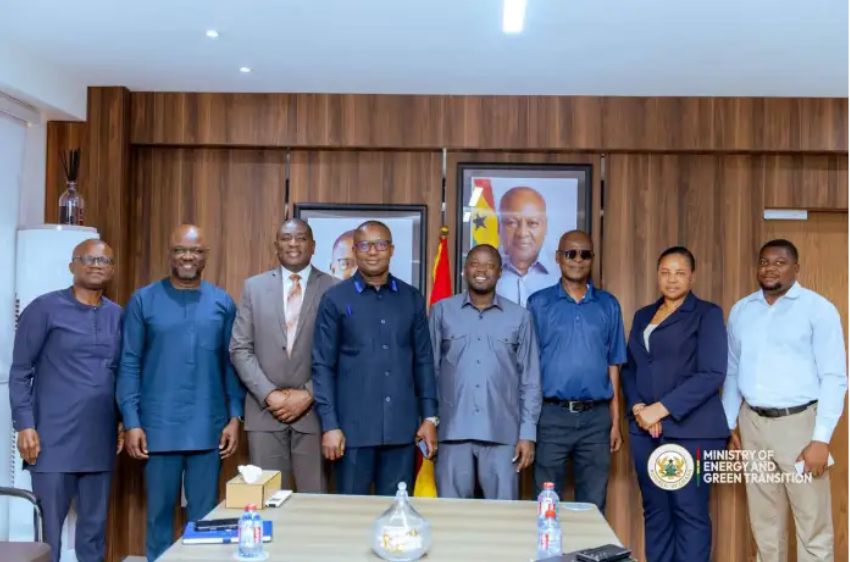
Ghana’s Energy and Green Transition Minister, Dr. John Abdulai Jinapor, has assured industry stakeholders that the government will safeguard institutional interests as Parliament considers the proposed National Petroleum Authority (NPA) Bill, 2026.
Jinapor gave the assurance during a meeting with civil society organisations (CSOs) on Monday, where discussions focused on concerns surrounding the proposed legislation and its potential impact on the downstream petroleum sector.
The engagement followed earlier consultations with the Chamber of Bulk Oil Distributors (CBOD), BOST Energies, the NPA and other industry stakeholders.
The bill, presented to Parliament on Thursday, November 19, seeks to replace the National Petroleum Authority Act, 2005 (Act 691), which provides the legal framework for regulating Ghana’s downstream petroleum industry.
It proposes clearer institutional responsibilities, improved coordination among regulators and stronger enforcement powers for the NPA to enhance oversight and accountability.
The legislation also seeks to establish three funds the Distribution Fund, Infrastructure Fund and Liquefied Petroleum Gas Promotion Fund while incorporating the existing Unified Petroleum Price Fund into the proposed Distribution Fund.
Other provisions include a multi-stage dispute resolution mechanism and the establishment of a Petroleum Downstream Tribunal to handle industry-related disputes.
However, the bill has faced opposition from the General Transport, Petroleum and Chemical Workers’ Union (GTPCWU), which has threatened a nationwide strike if Parliament passes it without amendments.
The union argues that Clause 103 could weaken BOST Energies financially by allowing private operators to enter the inland petroleum storage and trans-shipment business, traditionally associated with the state-owned company.
Jinapor said the government remained committed to building a stable, transparent and competitive petroleum industry, adding that consultations with civil society groups and industry players would continue as Parliament considers the proposed reforms.