
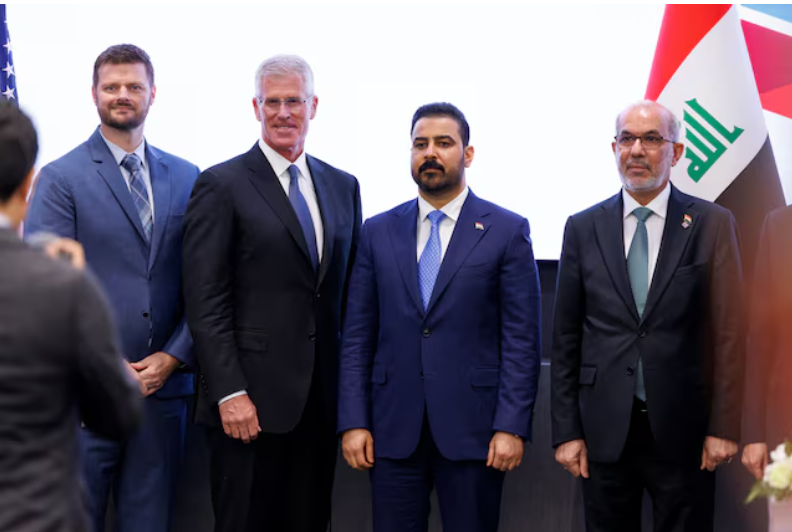
Western energy companies signed a series of oil, gas and pipeline agreements with Iraq during a U.S.-Iraq business summit in Washington on Friday, as Baghdad seeks to strengthen economic ties with the United States and diversify its energy export routes beyond the Strait of Hormuz.
Iraqi Prime Minister Ali al-Zaidi said the government is pursuing an open-door investment policy, encouraging international companies to participate in energy projects. Iraqi officials and U.S. firms signed non-binding agreements and memorandums of understanding worth more than $60 billion across the energy, healthcare and technology sectors.
The agreements come as regional tensions following the U.S.-Israeli war on Iran have disrupted Iraq’s traditional export routes, prompting Baghdad to accelerate plans for alternative infrastructure that can safeguard oil exports and strengthen long-term energy security.
Chevron signed agreements to advance potential participation in Iraq’s West Qurna 2 and Nassiriya oilfields after al-Zaidi visited the company’s Houston headquarters. The U.S. oil major also plans to invest in a pipeline linking Iraq to Syria’s Mediterranean coast, creating an alternative route that bypasses the Strait of Hormuz.
Chevron executive Jake Spiering said the new export corridor could transform Iraq into a regional energy trading hub comparable to the United States’ Henry Hub and Cushing, highlighting the country’s significant long-term energy potential.
ConocoPhillips also agreed to acquire a 42% stake in BP Energy of Kirkuk Ltd, joining BP in the redevelopment of four producing oilfields in northern Iraq as both companies expand their presence in one of the Middle East’s largest oil-producing nations.
BP Chief Executive Meg O’Neill described Iraq as having “fantastic” resource potential, saying the partnership would enhance both Iraqi and global energy security, while ConocoPhillips CEO Ryan Lance pledged to bring the company’s technology, expertise and investment to support Iraq’s energy sector.
U.S. envoy Tom Barrack said Iraq is emerging as a key strategic partner despite regional instability, while al-Zaidi’s five-day visit to the United States included talks with President Donald Trump, who said the two countries would pursue additional business deals expected to create jobs and deepen bilateral economic cooperation.