

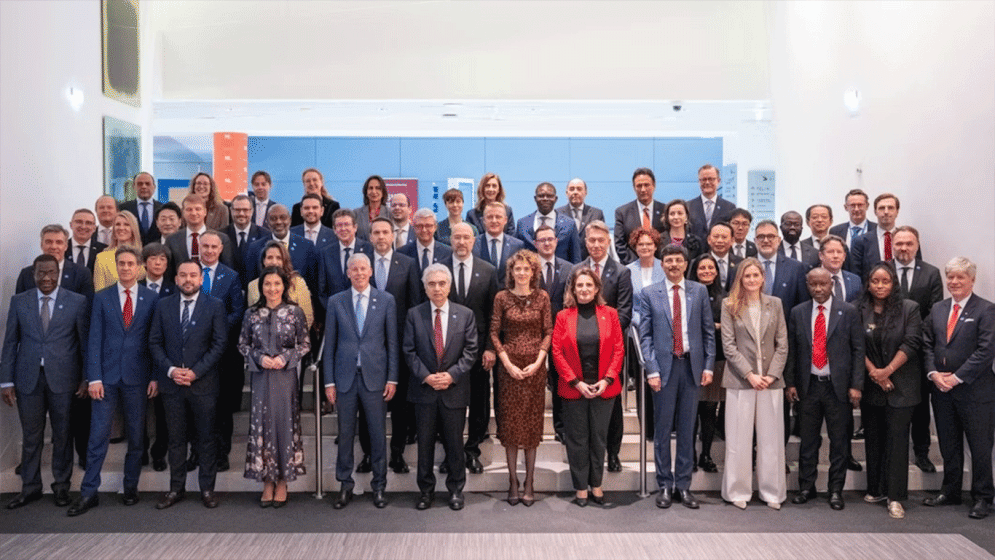
Global energy leaders have reaffirmed their commitment to accelerating renewable energy deployment at the 2026 Ministerial Meeting of the International Energy Agency, held over two days in Paris, France.
The gathering brought together senior officials from a record 54 countries, including about 40 energy ministers, alongside executives from 55 major energy companies with a combined market value of $14 trillion, the agency said on Sunday.
Chaired by Dutch Deputy Prime Minister and Climate Minister Sophie Hermans, the meeting focused on strengthening secure, affordable and sustainable energy systems amid rising global demand and mounting climate pressures.
Ministers underscored the need to advance the transition to net-zero emissions in line with commitments made at COP28, while ensuring resilience in increasingly uncertain geopolitical and economic conditions.
IEA Executive Director Fatih Birol described the summit as the largest in the agency’s history, saying robust data and independent analysis were vital to navigating complex energy challenges.
Participants approved expanded cooperation with Brazil, Colombia, India and Vietnam, extending the IEA’s coverage to more than 80% of global energy consumption.
Renewables dominated discussions, with UK Energy Secretary Ed Miliband calling them the most reliable and cost-effective path to meeting surging demand and climate goals, while European Commissioner Dan Jørgensen stressed their role in boosting industrial competitiveness and energy security.
French President Emmanuel Macron praised the agency’s guidance in balancing energy transition efforts with supply security, as governments grapple with volatility in global markets.
Ministers also endorsed expanding the IEA Critical Minerals Security Programme and integrating the Clean Cooking Alliance to widen access to sustainable cooking solutions for more than two billion people worldwide.
The meeting concluded with broad consensus that renewable energy will remain central to the global energy landscape, as leaders called for resilient grids, diversified supply chains and an orderly shift away from fossil fuels.