

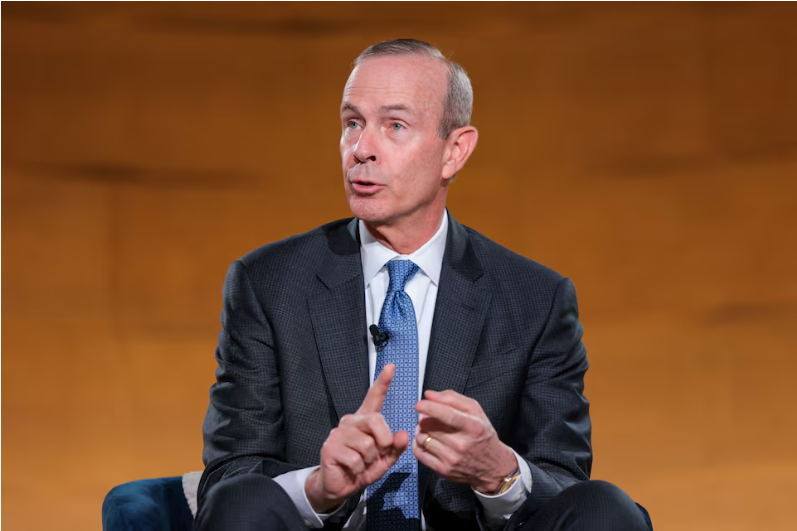
Chevron’s Chairman and CEO, Mike Wirth, warned on Monday that physical shortages in global oil supply are beginning to emerge following the continued closure of the Strait of Hormuz, a critical route for roughly 20% of the world’s crude flows.
Speaking at an event hosted by the Milken Institute, Wirth said the disruption linked to the ongoing U.S.-Israeli conflict with Iran has started to absorb excess supplies, including commercial inventories, sanctioned “shadow fleet” shipments, and strategic reserves.
He noted that economies, particularly in Asia, are likely to feel the impact first due to their heavy reliance on Gulf oil exports, with Europe expected to follow as supply constraints deepen.
According to Wirth, the imbalance between supply and demand will force an economic slowdown, as consumption adjusts to reduced availability of crude oil and refined products.
While the United States, a net oil exporter, may initially be shielded, Wirth cautioned that the effects will eventually ripple through its economy as global markets tighten.
He highlighted that one of the last Gulf shipments is currently being offloaded at the Port of Long Beach, underscoring the immediacy of supply disruptions.
Wirth compared the potential scale of the crisis to the oil shocks of the 1970s, which triggered widespread fuel shortages, rationing, and economic downturns worldwide.
The strain on fuel supplies is already being felt in the aviation sector, with rising jet fuel costs contributing to operational pressures.
In a stark example, Spirit Airlines reportedly ceased operations over the weekend as soaring fuel prices compounded its financial challenges.
Wirth concluded that unless supply routes are restored, the global economy faces mounting risks from prolonged energy shortages and reduced industrial activity.