
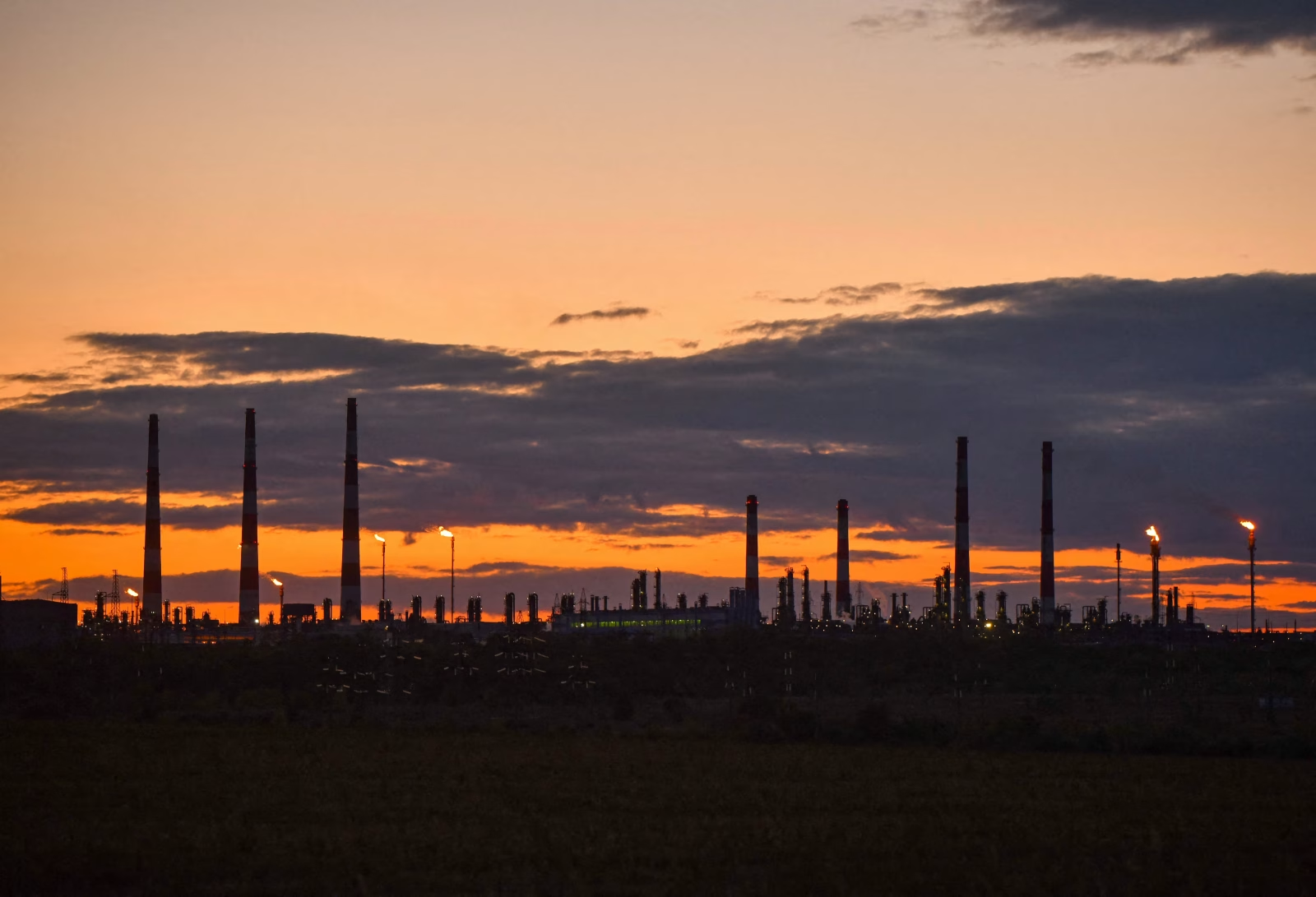

Chevron and Shell have cut oil and gas production at the Karachaganak field in Kazakhstan after a Ukrainian drone strike damaged the Orenburg gas processing plant in Russia. This incident, reported on Tuesday, is notable as it represents Ukraine’s strategy to target Russian energy infrastructure to disrupt Western oil operations abroad.
Kazakhstan’s Energy Minister, Erlan Akkenzhenov, announced a reduction in daily output by approximately 8,500 to 9,000 metric tons, equivalent to 66,810 to 71,000 barrels, following the attack. He expressed optimism that production restrictions would be lifted within three days. The disruption is significant as the Karachaganak field’s oil production is closely tied to its gas output, which relies on the Orenburg facility.
The Karachaganak field is operated by a consortium that includes Chevron, Shell, and Eni, along with stakes held by Russia’s Lukoil and Kazakhstan’s KazMunayGaz. As Kazakhstan contributes around 2% of global oil production, most of its output is exported via Russia.
The drop in production was estimated to be between 25% and 30%, bringing output down to 25,000 to 28,000 metric tons per day, a decline from the usual 35,000 to 35,500 tons. As inflation in Kazakhstan reached 12.9% in September, the government had recently implemented price controls on fuel and utilities, highlighting the economic pressures resulting from the ongoing conflict.