

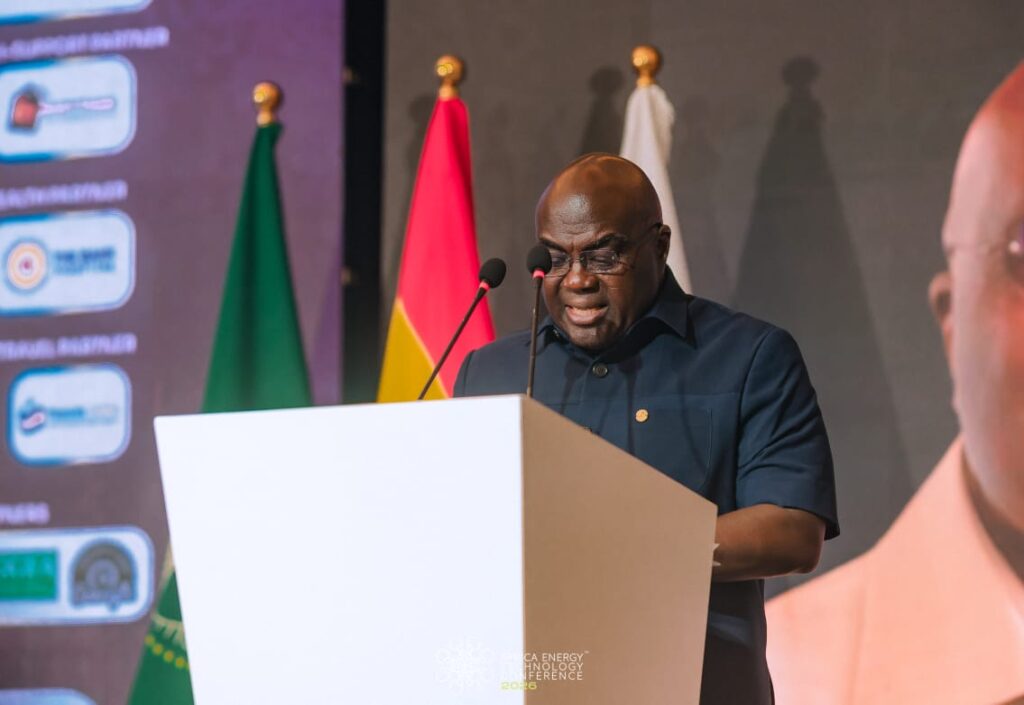
President John Mahama has announced that Ghana will proceed with the construction of its first 1,000-megawatt nuclear power unit from his address to the third edition of the Africa Energy Technology Conference. The speech, delivered on his behalf by Chief of Staff Julius Debrah at the conference themed “From Borders to Bridges: Driving Intra-African Trade and Development through Energy and Technology Services,” set out Ghana’s position on continental energy integration and called on African leaders to accelerate the transition from fragmented national energy markets to a connected continental economy.
On nuclear energy, the President said Ghana has reached a critical stage and that government is proceeding decisively to conclude intergovernmental processes and commence construction, while keeping the option open for small modular reactors. He said domestic resources will be mobilised to leverage capital for the project, without specifying a financing structure or timeline for groundbreaking. The announcement positions Ghana among a small group of African countries actively pursuing nuclear energy as part of their generation mix.
The President used the address to press the case for structural transformation of Africa’s energy architecture. He called for the capitalisation of the Africa Energy Bank and other multilateral continental financing institutions to fund large-scale regional infrastructure, the harmonisation of regulatory frameworks across regional blocs, and the launch of a continental apprenticeship and certification programme in energy technologies covering renewables, nuclear, natural gas and energy storage. He also called for the elimination of bureaucratic bottlenecks slowing the release of investment already pledged by the African Development Bank, World Bank and other institutions under the Mission 300 initiative, which targets energy access for more than 250 million unserved Africans by 2030.
The President cited the current administration’s energy sector performance as the foundation for Ghana’s continental positioning, disclosing that government had cleared over $1.4 billion in legacy energy sector debt, renegotiated power purchase agreements and reinstated critical guarantees to restore investor confidence in the sector. He described these steps as having repositioned Ghana as a credible and reliable destination for energy investment.
He added that a 24-hour economic policy, a national artificial intelligence strategy and a rated export agenda form the broader framework within which Ghana’s energy transition ambitions are being pursued, and stressed that women-led enterprises and youth innovators must have access to finance and opportunities across the renewable energy and green transition value chains.