
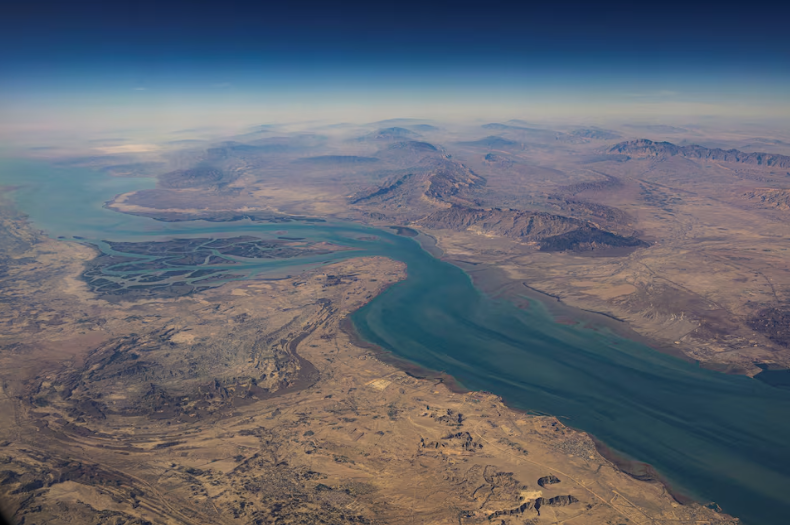

Escalating fighting involving Iran has severely disrupted shipping in the Strait of Hormuz, a critical النفط chokepoint between Iran and Oman that carries about a fifth of global oil and significant gas volumes.
At least four tankers have been damaged, one seafarer killed and roughly 150 vessels stranded after projectiles struck ships in recent days, prompting many to drop anchor in and around the Gulf, according to maritime security sources and ship-tracking data.
The disruption follows Iranian retaliation to U.S. and Israeli strikes, with Tehran saying it has closed navigation through the strategic waterway, forcing Asian governments and major refiners to assess crude stockpiles.
Among the latest incidents, the U.S.-flagged products tanker Stena Imperative was hit in Bahrain port early Monday, causing a fire that was later extinguished, while the Marshall Islands-flagged MKD VYOM was struck off Oman on Sunday, killing a crew member.
The Gibraltar-flagged bunkering tanker Hercules Star was also hit off the UAE coast but returned safely to anchorage in Dubai, its manager said, adding that all crew were unharmed.
Major marine insurers including Gard, Skuld, NorthStandard, the London P&I Club and the American Club have cancelled war risk coverage for vessels operating in Iranian and Gulf waters, with exclusions taking effect from March 5.
Japan’s MS&AD Insurance Group said it had suspended underwriting war risk policies covering waters around Iran, Israel and neighbouring countries, compounding uncertainty for shipowners.
Oil and European gas prices have surged on fears of a prolonged shutdown, with Brent crude futures jumping more than 7% as multiple energy facilities across the Middle East halted operations.
Freight costs for crude shipments from the Middle East to Asia, already at six-year highs, are expected to rise further as shipowners avoid the region and demand increases for longer-haul cargoes from the United States and West Africa.
Spot rates on the benchmark Middle East–China route, known as TD3C, have nearly tripled since the start of the year, with brokers citing mounting geopolitical risk and tight vessel availability as countries scramble to secure energy supplies.