
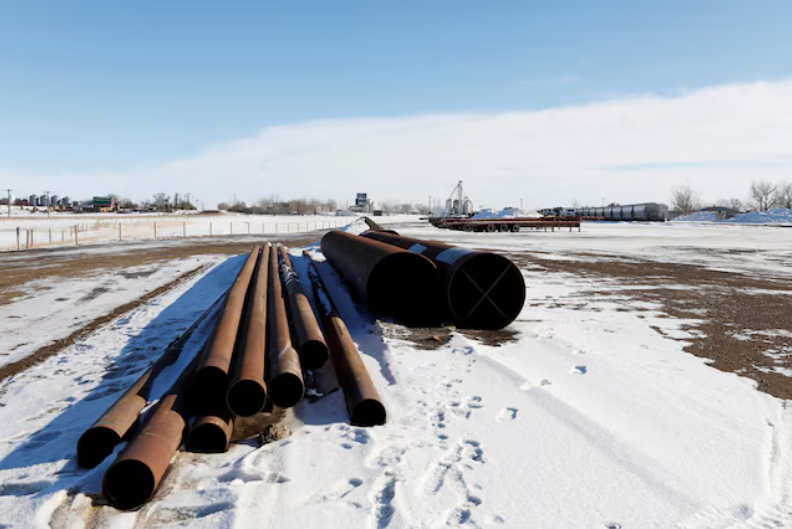

Canadian pipeline operator South Bow is exploring a plan to revive parts of the long-cancelled Keystone XL, aiming to boost Canada’s crude exports to the United States by more than 12% if it secures approval from U.S. President Donald Trump.
The proposal, developed in 2026, would follow a new route through the United States after former President Joe Biden revoked the original project’s permit in 2021 amid years of Indigenous and environmental opposition.
South Bow, created in 2024 to take over oil pipeline assets from TC Energy, is considering using about 150 km of pipeline already built in Alberta and permitted on the Canadian side.
Its potential U.S. partner, Bridger Pipeline, has applied to Montana regulators to construct a 645-mile pipeline from the border in Phillips County, Montana, to Guernsey, Wyoming, with capacity of up to 550,000 barrels per day.
However, analysts say Guernsey is not a major crude hub, meaning further links would be needed to connect supplies to refining centres such as Cushing, Patoka and the U.S. Gulf Coast.
The cross-border segment would require a presidential permit, and while Trump has called for lower oil prices and supports energy infrastructure, regulatory and political risks remain, especially if administrations change.
The proposal has also resurfaced in trade discussions, with Canadian Prime Minister Mark Carney reportedly raising the issue in talks linked to the renewal of the U.S.-Mexico-Canada Agreement.
Environmental groups, landowners and Indigenous communities are expected to challenge the project, echoing opposition that derailed Keystone XL five years ago.
Meanwhile, rival operators including Enbridge and the company behind the Trans Mountain pipeline are advancing less complex expansions that together would add hundreds of thousands of barrels per day in export capacity.
Analysts say South Bow must convince investors it can finance the multibillion-dollar project, navigate litigation risks and maintain shareholder returns while competing against cheaper, lower-risk pipeline expansions.