

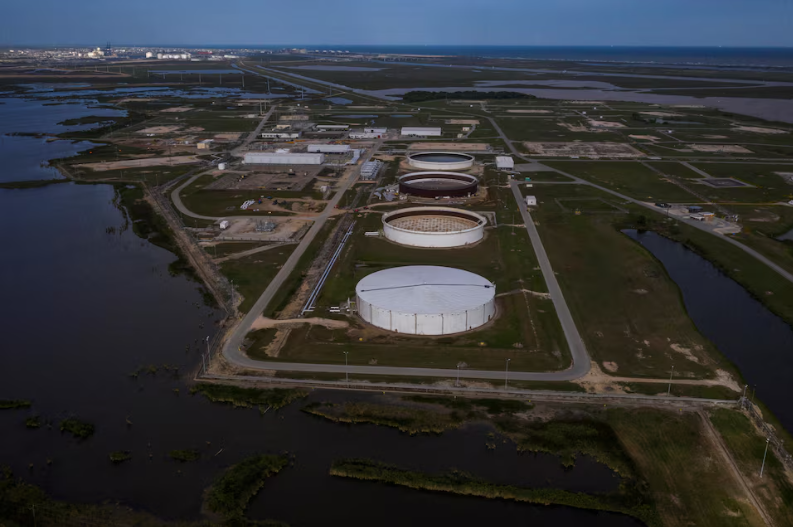
U.S. crude oil inventories held in the Strategic Petroleum Reserve (SPR) fell to 340.3 million barrels, their lowest level since 1983, according to data released by the Department of Energy on Monday.
The reserve declined by 8.9 million barrels, marking the third-largest drawdown on record, as part of a government programme that loans oil to companies to help ease elevated fuel prices following recent market disruptions.
The drop comes as the United States and Iran reached an agreement to end hostilities and reopen the Strait of Hormuz, a key global oil shipping route, while concerns over supply tightness continue to linger.
U.S. crude stockpiles have been under pressure in recent weeks due to strong refinery activity and robust export demand, which increased after supply disruptions linked to the Iran conflict that began in late February.
Combined U.S. oil inventories, including both commercial stocks and the SPR, have fallen sharply since the outbreak of the war, reaching their lowest levels since 2023.
Meanwhile, inventories at Cushing, Oklahoma the delivery hub for U.S. West Texas Intermediate crude futures slipped to 21.6 million barrels, close to operational minimum levels and raising concerns about available supplies.
The latest SPR level is below the low reached during former President Joe Biden’s administration, when emergency releases were made following Russia’s invasion of Ukraine.
Republican lawmakers previously criticised those large-scale sales, arguing they weakened the reserve and risked damaging its storage infrastructure, allegations the Biden administration rejected.
Under the current loan arrangement, companies receiving crude from the SPR must return the borrowed volumes along with additional barrels as a premium.
The Department of Energy said the programme is designed to support market stability while ensuring taxpayers incur no additional cost.