

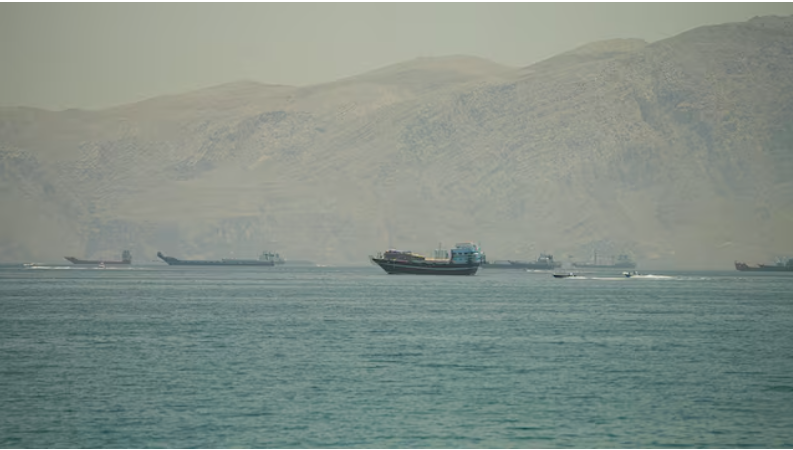
Two oil supertankers and an LNG carrier exited the Strait of Hormuz earlier this week with their tracking transponders switched off, according to shipping data from LSEG and Kpler, as vessels continued cautious movements through the strategically vital waterway.
The departures come amid limited but ongoing energy shipments from the Gulf region, where heightened geopolitical tensions have disrupted normal maritime traffic in recent months.
The VLCC Eagle Veracruz, carrying about 2 million barrels of Saudi crude loaded in late February, is bound for Quanzhou in China’s Fujian province and is expected to arrive on June 16 at a refinery operated by Sinochem.
Another supertanker, Nissos Keros, transporting around 1.8 million barrels of Das crude from the United Arab Emirates, is heading to India’s Visakhapatnam port, home to Hindustan Petroleum’s refinery, with arrival expected on June 3.
Shipping data showed both crude carriers passed through the Strait of Hormuz on Tuesday, while Chinese-flagged tanker Hua Lin Wan, operated by COSCO, exited the waterway on Wednesday carrying Kuwaiti naphtha destined for Huizhou in southern China.
Meanwhile, LNG tanker Umm Al Ashtan reappeared on ship-tracking systems on May 27 after weeks offline, now loaded with cargo from Abu Dhabi’s Das Island and sailing east toward India.
Companies linked to the vessels, including AET Tankers, Vitol, Kylades Maritime and ADNOC, either declined to comment or did not immediately respond to requests regarding the ships’ movements and routing.
The use of switched-off transponders has become increasingly common among vessels operating in sensitive Gulf waters, where security concerns and regional instability have complicated maritime operations.