
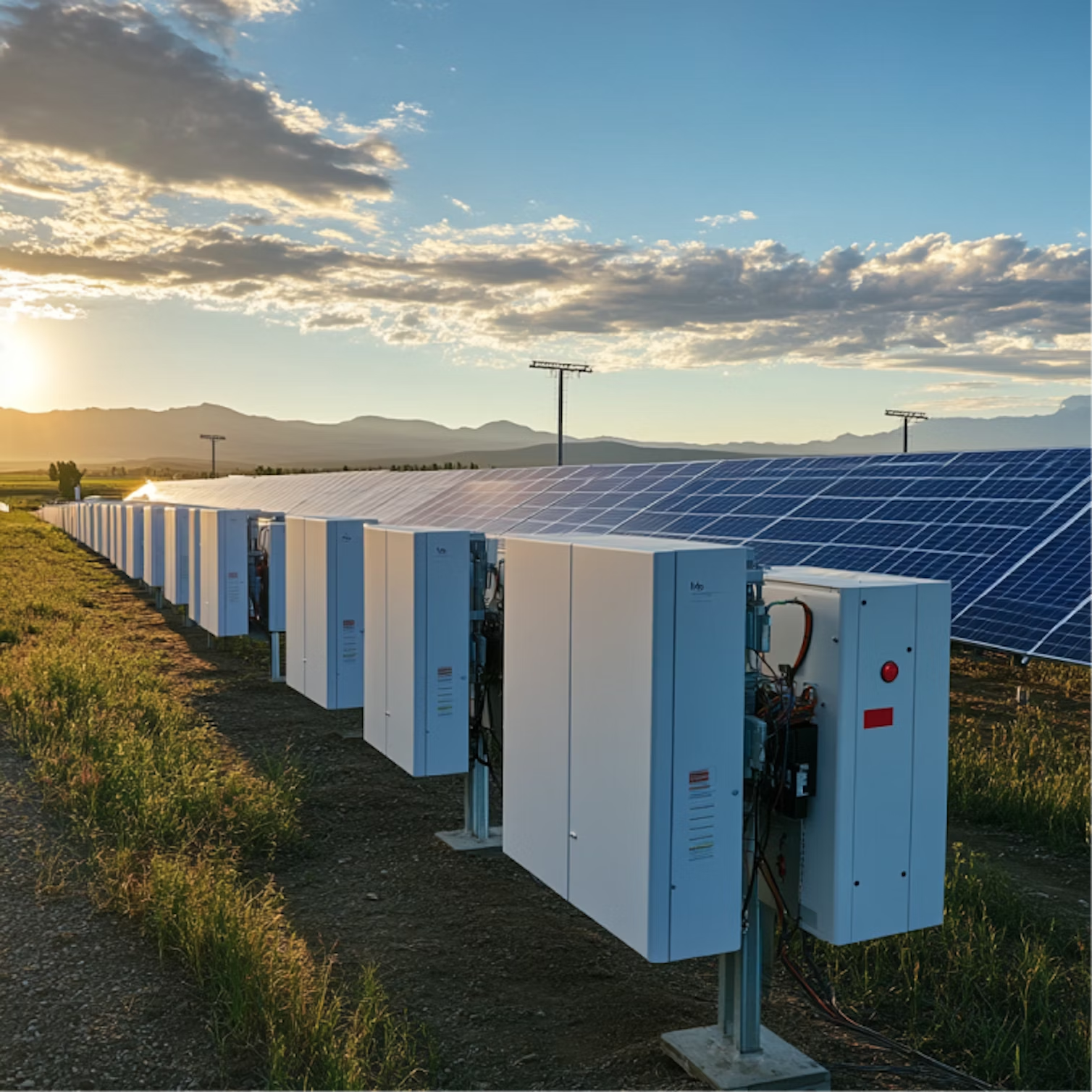

Russia’s Parus Electro LLC, a subsidiary of the state-owned Rosatom Group, has developed a prototype of the country’s first domestically produced string inverter for solar power plants, marking a milestone in Russia’s renewable energy technology sector.
String inverters play a critical role in solar power systems by converting direct current (DC) generated by photovoltaic panels into alternating current (AC) for transmission through electricity grids. The new technology is designed to improve power generation stability during winter and cloudy conditions, while extending daily generation hours.
According to Parus Electro, the inverter can operate reliably in extreme temperatures ranging from –50°C to +65°C and maintain stable voltage levels, even in remote or weak-grid locations. It is suitable for both utility-scale ground-mounted solar plants and small rooftop installations.
The inverter supports adaptive reactive power control, allowing it to meet the technical requirements of different grid operators. It also enables integration with energy storage systems and can operate in grid-connected or hybrid modes.
A key feature of the new inverter is its modular design, which allows the power supply module to be replaced without dismantling the entire system. This significantly reduces maintenance and repair time from several hours to just a few minutes, minimising downtime and energy generation losses.
The device has an efficiency rate of 98.3 percent and is built using more than 90 percent locally sourced components. Parus Electro plans to begin serial production at its own facilities in 2026.
The inverter development comes amid broader efforts by Russian companies to advance energy infrastructure projects internationally. Rosatom recently installed a reactor vessel at Unit 1 of Egypt’s El-Dabaa Nuclear Power Plant and is supporting the construction of a 200-megawatt solar power plant in Mali. In addition, the first of four Russian test stands has been delivered to the construction site of the International Thermonuclear Experimental Reactor (ITER) in southern France.