

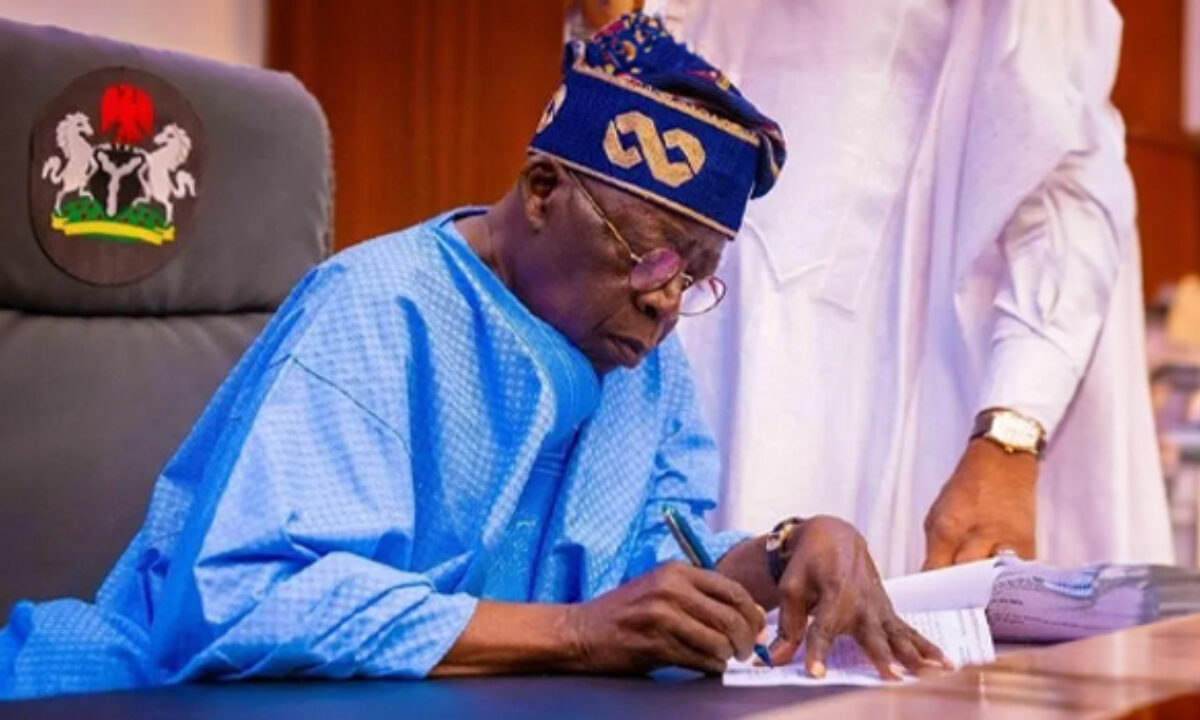
President Bola Ahmed Tinubu has approved a ₦3.3 trillion payment plan to settle long standing debts in Nigeria’s power sector, in a move aimed at restoring stability and improving electricity supply nationwide.
According to a statement issued by the President’s Special Adviser on Information and Strategy, Bayo Onanuga, the liabilities accumulated between February 2015 and March 2025.
The government reached the decision following a detailed verification process with key stakeholders, agreeing on the amount as a full and final settlement of outstanding obligations.
Implementation of the plan is already underway, with 15 power generation companies signing settlement agreements valued at ₦2.3 trillion.
So far, the Federal Government has mobilised ₦501 billion to support the initiative, with ₦223 billion already disbursed while further payments continue.
Officials say the intervention is expected to improve electricity generation by easing financial constraints across the value chain, enabling power producers to operate more efficiently.
The Special Adviser on Energy to the President, Olu Arowolo-Verheijen, described the programme as a major step toward restoring confidence in the sector.
She noted that beyond clearing debts, the initiative is designed to ensure gas suppliers are paid, power plants remain operational, and the overall system becomes more reliable.
Arowolo Verheijen added that the programme forms part of broader reforms, including improved metering and the rollout of service based tariffs that link electricity pricing to supply quality.
The government is also focusing on improving power delivery to critical sectors such as industries, businesses, and small enterprises to drive economic growth and job creation.
She emphasised that the goal is to deliver more reliable electricity to households while strengthening support for businesses.
President Tinubu also commended stakeholders for their cooperation and confirmed that the next phase of the programme, known as Series II, will begin later this quarter.
Nigeria’s power sector has long faced challenges including liquidity constraints, ageing infrastructure, and inconsistent supply, with unpaid debts widely seen as a major barrier to improved performance.
The latest move is regarded as one of the most significant financial restructuring efforts in the sector in recent years.