

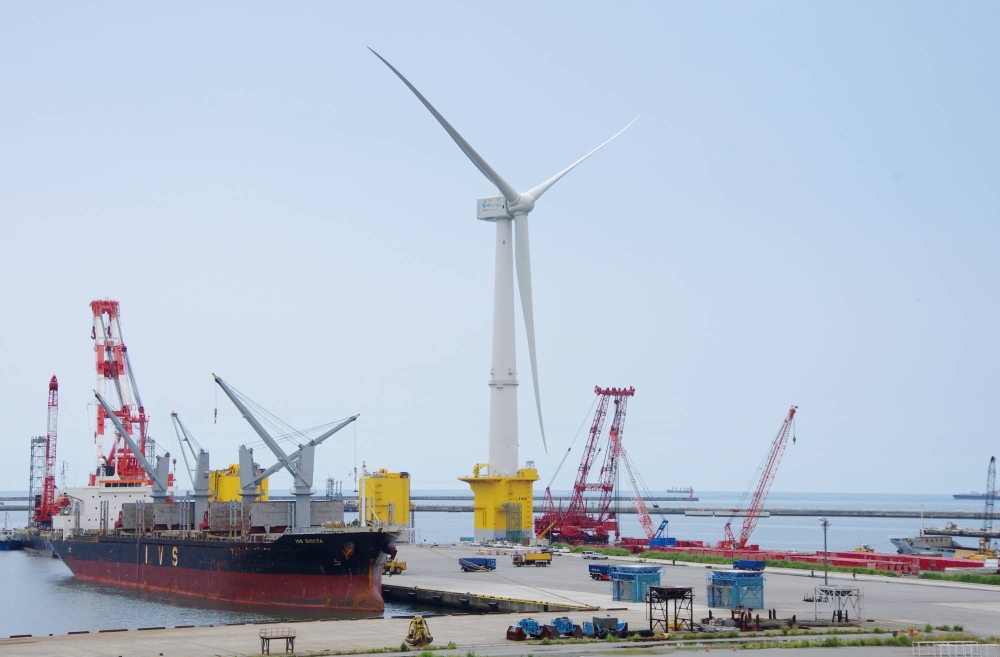
Japan will begin planning a national floating wind test centre in 2025, according to industry leaders, as the country pushes forward with renewable energy despite recent setbacks in offshore projects. The announcement comes after Mitsubishi-led consortia withdrew from three wind projects totaling 1.8 gigawatts, a blow to Japan’s clean energy ambitions.
Masakatsu Terazaki, chairman of the Floating Offshore Wind Technology Research Association (FLOWRA), said Japan must test floating turbines under its own ocean and weather conditions, which differ from Europe. FLOWRA, established last year, represents 21 domestic firms including major LNG buyers JERA and Tokyo Gas.
The new centre is expected to collaborate with international partners such as Scotland’s EMEC and Norway’s METCentre, both of which have long experience in floating wind technologies. Japan currently operates seven offshore wind farms, including two small floating turbines, with a combined capacity of 253 megawatts.
The government has set a goal of 45 GW of offshore wind capacity by 2040, including at least 15 GW from floating projects across its vast exclusive economic zone, the world’s sixth largest. FLOWRA aims to contribute to Japan’s first large-scale floating wind project, targeted for fiscal 2029.
Japan’s electricity demand is projected to rise 6% by 2035, fueled by data centres and semiconductor plants. While nuclear and LNG will remain part of the mix, officials stress that offshore wind is essential for energy security and carbon neutrality.
Terazaki acknowledged concerns that Mitsubishi’s withdrawal has weakened momentum, but argued such setbacks are common worldwide, citing similar challenges faced in the UK and Netherlands. He emphasized Japan’s lack of fossil fuel resources and limited land for solar, saying the sea remains the nation’s most promising energy frontier.