
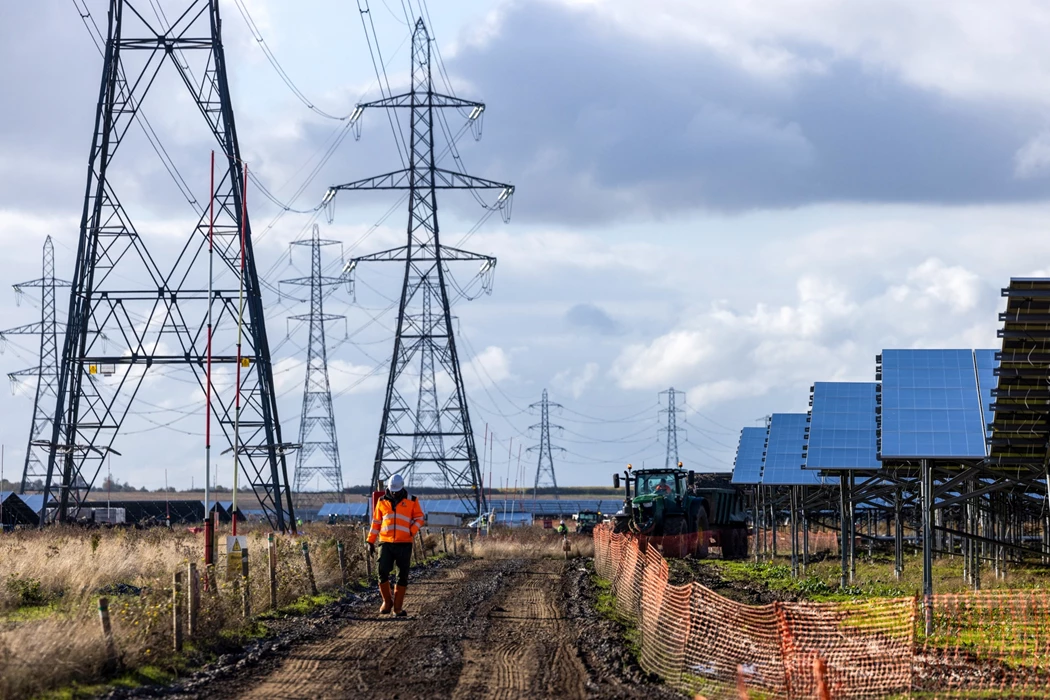

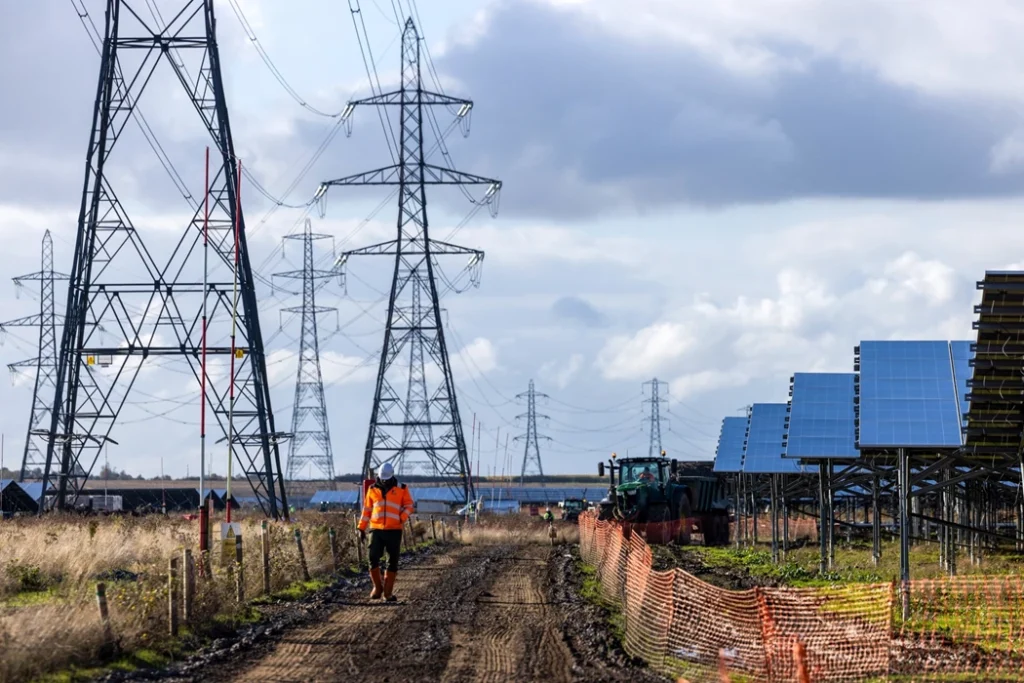
The UK government’s ambitious plan to build a carbon-free power grid by 2030 involves 70 million solar panels, 6,000 wind turbines, and 4,500 kilometers of undersea cables, at an estimated cost of £240 billion. Prime Minister Keir Starmer sees the project as central to reviving economic growth and positioning Britain as a global leader in clean energy.
The initiative, however, is meeting political resistance. Reform UK, currently leading in polls, argues the plan will push up household bills and hurt businesses, while even some Labour allies are voicing concerns about affordability.
Energy Secretary Ed Miliband insists the project will cut both emissions and costs, but soaring borrowing rates, rising construction expenses, and failed subsidy auctions have raised doubts. Developers, including Denmark’s Orsted, have already pulled back from key offshore projects due to financial pressures.
This week’s offshore-wind subsidy auction represents a decisive test, as it may be one of the last chances to secure enough renewable generation capacity to meet the 2030 target. Industry experts warn that developers will demand higher prices to commit, which could feed through to consumers for years to come.
Britain’s push comes as global momentum for net zero wavers, with other governments scaling back. Failure to deliver could make the UK a cautionary tale for energy transition, while success would secure its place as a green superpower.
The country has already made progress by expanding offshore wind and closing coal plants faster than any other G7 nation. Yet, experts warn that moving to a grid dominated by renewables requires costly backup systems for periods when wind and solar cannot meet demand.
Public opinion remains divided: most Britons support net zero in principle, but only if it leads to cheaper energy bills. Rising household power costs this winter highlight the central challenge—balancing climate goals with affordability.
As the labour government faces economic headwinds and political pushback, the outcome of the current auction will help determine whether the UK can truly deliver its bold 2030 clean energy vision—or risk falling behind.