


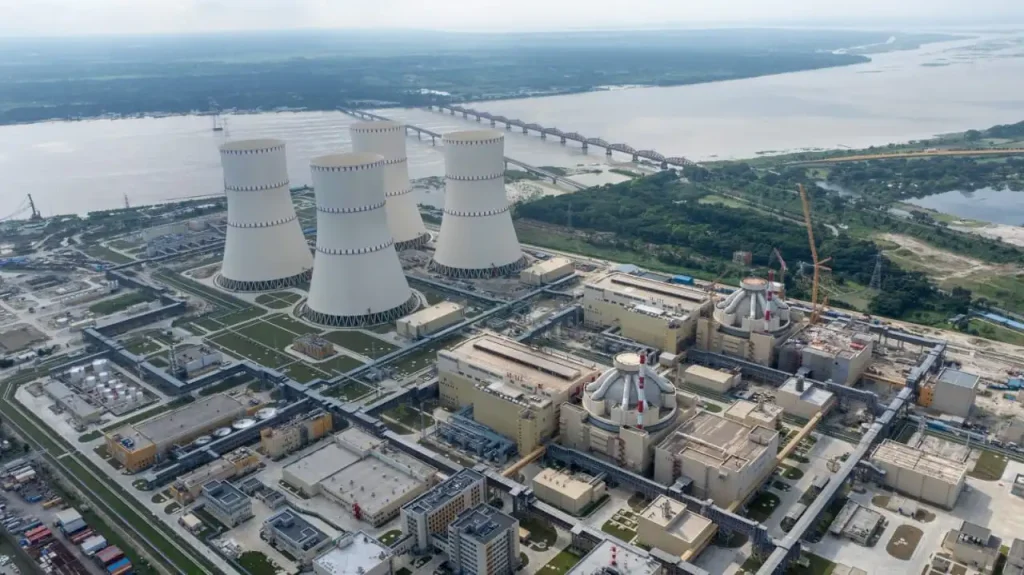
Bangladesh has connected the first unit of its Rooppur Nuclear Power Plant to the national electricity grid, marking a major milestone in the country’s drive to diversify its energy supply, while Ghana advances preparations for its first nuclear power facility.
The 2,400-megawatt Rooppur plant, built by Russia’s state-owned nuclear corporation Rosatom, achieved its first grid synchronisation after Unit 1 reached 40 per cent of its rated capacity. The generator initially supplied 370 megawatts of electricity to Bangladesh’s national grid.
Rosatom Director General Alexey Likhachev described the development as an important milestone for Bangladesh and Russia, highlighting nuclear energy’s potential to reduce Bangladesh’s reliance on imported hydrocarbons while strengthening domestic engineering, scientific research and technical expertise.
Meanwhile, Ghana is stepping up efforts to establish its nuclear energy industry through a $200 million, 24-month readiness programme scheduled to run from January 2027 to December 2028.
Finance Minister Cassiel Ato Forson announced the initiative on November 12 during the presentation of the 2027 national budget to Parliament, outlining plans to train more than 2,000 scientists to support the safe and reliable operation of future nuclear power facilities.
The Ghanaian government also aims to conclude an engineering, procurement, construction and financing agreement for a fully state-owned nuclear power plant by December 2028.
In October, President John Dramani Mahama confirmed that Ghana had begun discussions with Rosatom on developing the country’s first nuclear power plant, as authorities work to establish the regulatory and licensing structures required for nuclear energy operations.
Elsewhere, Turkey is advancing its nuclear ambitions, with Unit 1 of the Rosatom-built Akkuyu Nuclear Power Plant commencing hot functional testing on November 15 after receiving regulatory approval.
The tests involve assessing the reactor’s equipment and systems under operating conditions ahead of the initial loading of nuclear fuel, representing a critical stage towards the plant’s start-up operations.
The developments in Bangladesh, Ghana and Turkey highlight growing interest in nuclear energy as countries seek to diversify electricity generation, strengthen energy security, reduce dependence on imported fossil fuels and develop domestic technical expertise.