
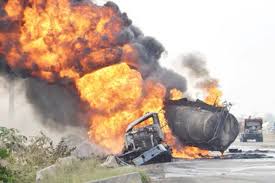

The Chief Executive Officer of the National Petroleum Authority (NPA), Mr. Godwin Edudzi Tameklo, Esq., has raised concerns over the growing number of road accidents involving Bulk Road Vehicles (BRVs), commonly known as fuel tanker trucks.
Speaking at the 2026 Safety Week organised by the Chamber of Oil Marketing Companies in Accra under the theme “Manage the Risk Before it becomes an Incident,” he described the trend of tanker-related crashes as alarming and potentially deadly.
Mr. Tameklo warned that such incidents pose a serious threat not only to transport operators but also to innocent road users, citing a recent near-miss accident in the Nsawam area where a fuel tanker narrowly avoided colliding with a bus carrying about 50 passengers.
He said the Authority has begun engagements with stakeholders including the Tanker Drivers Union, Tanker Owners Association, and the Driver and Vehicle Licensing Authority to identify the root causes of the accidents. He questioned whether the problem stems from inexperienced drivers, cost-cutting by tanker owners, or weak enforcement of licensing standards.
Mr. Tameklo stressed that tanker ownership is a major investment, noting that each vehicle costs nearly $200,000 and should therefore not be entrusted to unqualified or inexperienced drivers. He urged owners to ensure only properly trained and competent drivers are engaged to handle such high-risk cargo.
He further explained that petroleum products are highly flammable, making strict safety compliance essential. He indicated that the NPA will introduce stronger regulatory measures, including mandatory key performance indicators (KPIs) and detailed safety checklists before any new tanker is registered.
The NPA boss also called on stakeholders in the petroleum downstream sector to support tighter enforcement of safety regulations in order to eliminate reckless practices and improve road safety.
Meanwhile, the Director of Fire Safety at the Ghana National Fire Service, DO I Michael Korsah, attributed the accidents largely to driver fatigue and negligence. He emphasized that most of the incidents are preventable if drivers are well-rested and operators enforce proper safety routines.
He further urged transport operators and institutions to embed safety culture into daily operations, stressing that safety should be treated as a continuous practice rather than a slogan.