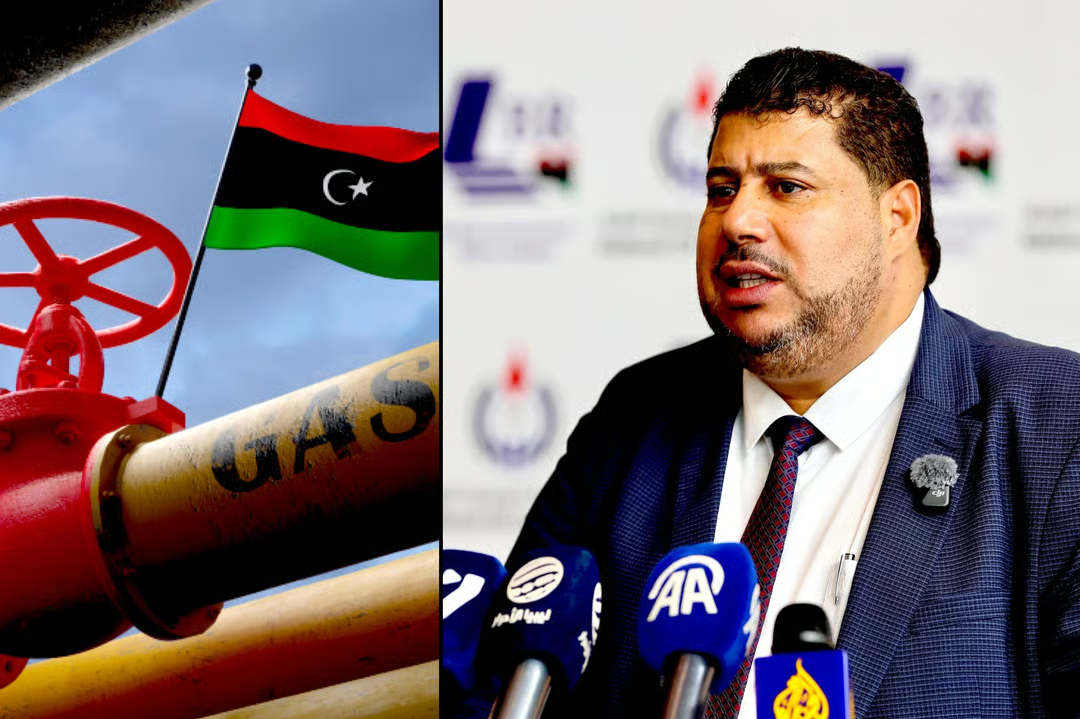

Libya has awarded new oil and gas exploration licences for the first time since 2007, as the National Oil Corporation (NOC) allocated five blocks in a 2025 tender aimed at reviving upstream investment after years of conflict and political division.
The licensing round, announced on Wednesday, offered 20 blocks including 11 offshore but secured awards for only five, reflecting cautious investor sentiment despite renewed efforts to stabilise the hydrocarbons sector.
Winning bidders include U.S. major Chevron, Nigeria’s Aiteo and consortia featuring Repsol, BP, Eni, QatarEnergy, Hungary’s MOL Group and Türkiye’s state firm Türkiye Petrolleri Anonim Ortaklığı (TPAO), which secured two blocks.
Among the awards, an onshore tract in the Sirte Basin was granted to a TPAO–Repsol consortium, while a deepwater offshore block near Benghazi was allocated to TPAO, Repsol and MOL under a joint venture structure.
The tender forms part of a broader 22-block offering launched in 2025 and follows more than $20 billion in agreements signed last month with TotalEnergies and ConocoPhillips to boost long-term production.
Prime Minister Abdelhamid Dbeibah said the strategy aims to raise crude output by 850,000 barrels per day over 25 years, from current levels of about 1.4–1.5 million bpd, leveraging Africa’s largest proven reserves estimated at 48.4 billion barrels.
NOC chairman Masoud Suleman described the awards as a restoration of investor trust, adding that revised contract terms were designed to be more competitive and transparent after earlier models discouraged foreign participation.
Libya’s oil sector has struggled since the 2011 NATO-backed uprising that toppled Muammar Gaddafi, leaving rival administrations in the east and west and causing repeated disruptions to fields and export terminals.
Analysts say the limited uptake five of 20 blocks underscores lingering political and security risks, even as the NOC prepares further negotiations for unallocated acreage and plans another licensing round later in 2025 to test market appetite for sustained upstream investment.