
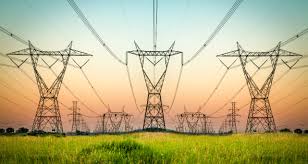

Kenya has enhanced the stability of its national electricity grid following the commissioning of the 132kV Sondu–Homa Bay (Ndhiwa) transmission line by the Kenya Electricity Transmission Company (KETRACO). The project marks a significant step in reinforcing transmission infrastructure in the South Nyanza region and improving overall grid resilience.
The 69-kilometre line enhances electricity reliability in Homa Bay and neighbouring areas by reducing technical losses and expanding transmission capacity. The upgrade is expected to support commercial growth and industrial development while enabling more consistent power delivery to homes and enterprises.
Importantly, the new line introduces an alternative evacuation route for power generated at the Sondu and Sangoro stations. This redundancy strengthens system reliability, helping to limit outages during maintenance work or unforeseen faults. Essential services such as healthcare facilities, schools and manufacturing operations stand to benefit from improved supply stability.
The project was funded by the Government of Kenya and executed by a local contractor, supporting domestic expertise and employment. It aligns with the country’s broader energy strategy, which identifies electricity as a foundation for industrial transformation. Kenya continues to pursue universal access to electricity and aims to achieve a fully renewable energy mix by 2030.
Separately, Kenya concluded a landmark public-private partnership (PPP) agreement in December 2025 to expand high-voltage transmission capacity by 620kV. The initiative represents one of the largest energy infrastructure undertakings in the country’s history.
The PPP is spearheaded by Africa50 in collaboration with Power Grid Corporation of India Limited (POWERGRID). With an estimated value of $311 million (approximately KSh40.4 billion), the project includes two major corridors: the 400kV Lessos–Loosuk line across Nandi and Samburu counties, and the 220kV Kibos–Kakamega–Musaga line serving Western Kenya.
Together with the development of new substations and grid interconnections, the expanded infrastructure will bolster system dependability, lower transmission losses and facilitate greater integration of renewable energy resources into the national grid.
Under the 30-year concession arrangement, the Africa50–POWERGRID consortium will be responsible for designing, financing, constructing, operating and maintaining the transmission assets. KETRACO will provide performance-based payments tied to operational standards, promoting long-term efficiency and accountability.
The additional high-voltage lines will enable system operators to reroute electricity during disruptions, thereby reducing the risk of widespread outages. New substations at Loosuk, Lessos, Kibos, Kakamega and Musaga will enhance load management, safeguard equipment and accommodate Kenya’s rising electricity demand.