

The United States has launched airstrikes on three major Iranian nuclear facilities in a dramatic military escalation, President Donald Trump confirmed, describing the mission as a “very successful attack.”
The operation targeted Iran’s Fordow enrichment plant near Qom—buried deep beneath a mountain—as well as nuclear sites in Natanz and Isfahan, using bunker buster bombs to cripple their infrastructure.
The airstrikes, part of a campaign dubbed Operation Midnight Hammer, mark direct US involvement in the ongoing Israel-Iran conflict, intensifying fears of a wider Middle East war.
Iran’s Foreign Minister Abbas Araghchi condemned the US attack, warning of “everlasting consequences” and vowing that Iran “reserves all options” for retaliation.
US Defense Secretary Pete Hegseth stated the strikes devastated Iran’s nuclear capabilities but emphasized that the action was not aimed at regime change, but rather to defend American interests and allies.
In response, Iran’s Revolutionary Guard Corps threatened revenge, declaring that “invaders must now await responses that will bring regret.”
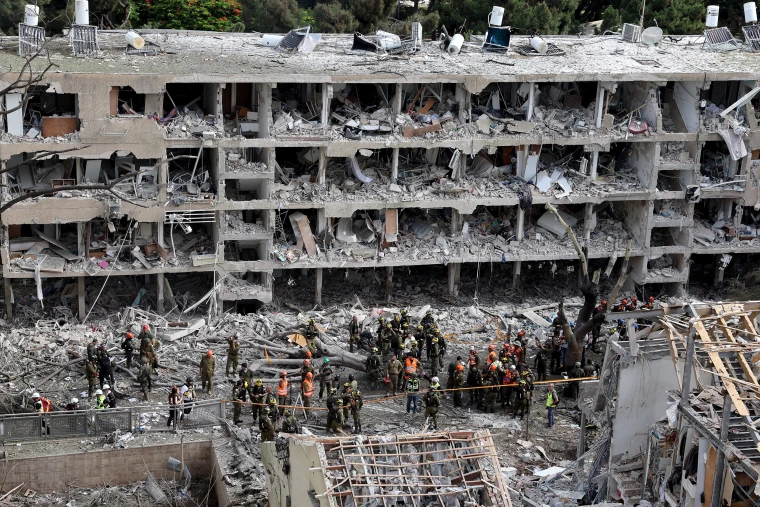
Shortly after the US offensive, Iran fired 40 missiles at Israel, striking cities including Haifa, Tel Aviv, Rishon LeZion, and Ness Ziona, and deploying its largest ballistic missile, the Khorramshahr-4.
While Iran denies seeking nuclear weapons, it has requested an emergency UN Security Council meeting to condemn the US airstrikes and preserve international peace.
Iran’s foreign minister has also flown to Moscow for consultations with Russian President Vladimir Putin, describing Russia as a “friend of Iran” and signaling broader diplomatic maneuvering.
Israeli Prime Minister Benjamin Netanyahu praised Trump’s action as a “bold decision” that would “change history,” as tensions spiral and the possibility of a prolonged regional war looms.